How a Livestock Marketplace Should Work for You
Published October 9, 2026
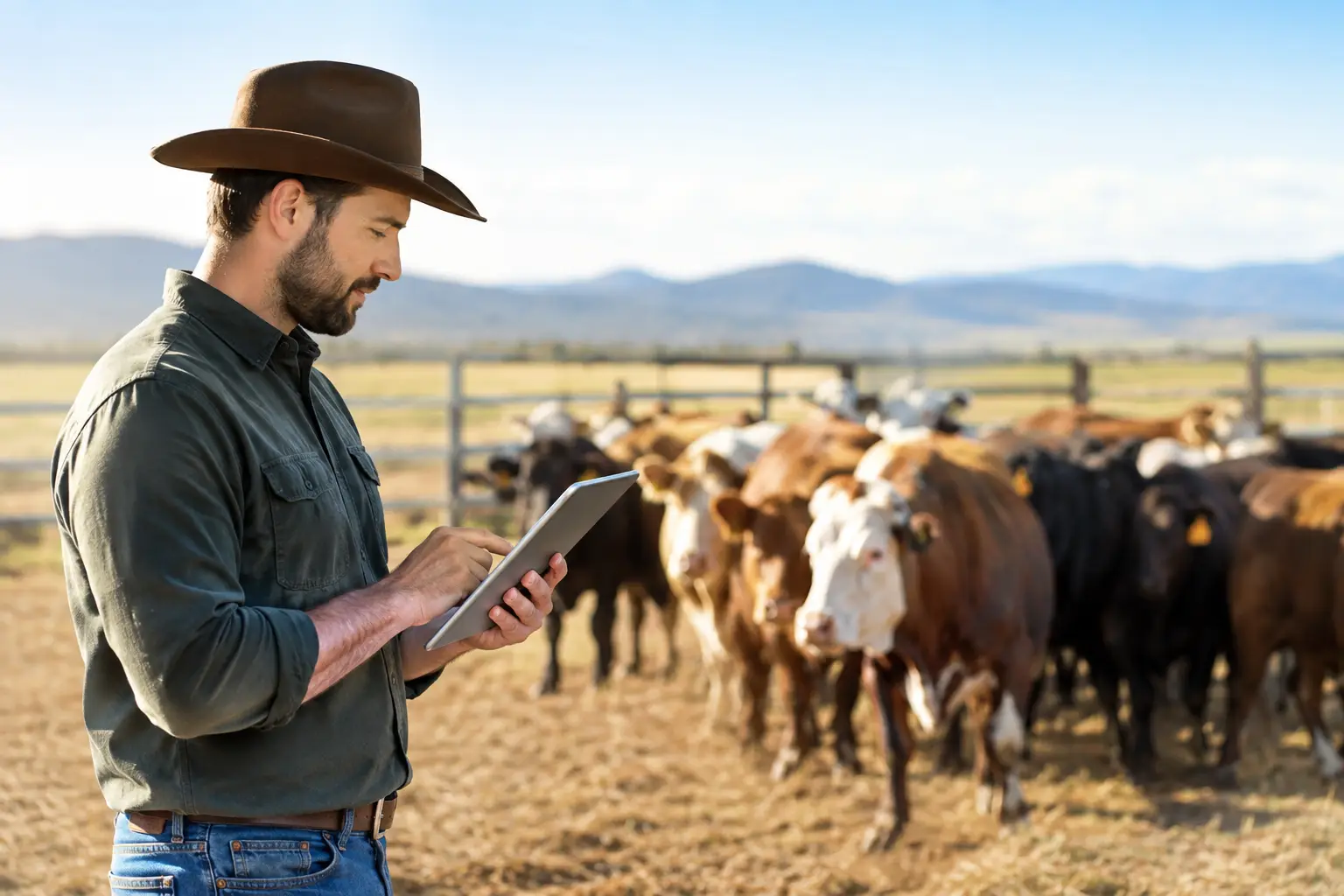
A good livestock marketplace should do more than put a photo and a price in front of strangers. It should help a cattleman find serious buyers outside his immediate circle, let a sheep producer compare nearby breeding stock, and give both sides enough straight information to decide whether the trip, the trailer fuel, and the deal make sense.
That does not mean a website can replace a handshake, a set of working pens, or a buyer who knows what he is looking at. Livestock is still a hands-on business. Condition, disposition, health history, frame, udders, feet, fill, and current market conditions all matter. A marketplace simply gives owner-to-owner transactions a wider gate.
What a Livestock Marketplace Is Supposed to Do
Traditional county sale barns have their place. They move cattle quickly, establish a public market, and put buyers and sellers in the same room. But they are not the right fit for every animal or every seller. A registered bull, a proven broodmare, a set of gentle dairy goats, or a carefully developed replacement heifer may deserve more time and a buyer looking for those exact traits.
Private-treaty sales offer that time, but they have often depended on word of mouth, local bulletin boards, and a phone list that only reaches so far. An online livestock marketplace expands the audience while keeping the transaction direct. The seller talks to the buyer. The buyer asks the questions. Both parties work out payment, paperwork, loading, and hauling on terms they can live with.
The useful part is reach. The necessary part is transparency. A listing that hides the location, gives no age or health details, and uses one distant photo creates wasted calls and wasted miles. A listing with real photos, an honest description, a clear asking price or negotiation range, and a county-level location lets a buyer sort out whether to pursue it.
Better Listings Bring Better Buyers
Serious buyers do not need sales language. They need facts. If you are listing livestock, write the ad the way you would answer questions at the fence line.
Start with what the animal is and what the buyer is getting. For cattle, that may include breed or cross, sex, age, approximate weight, vaccination history, pregnancy status, registration information, disposition, and whether the animal is halter broke or accustomed to electric fence. For sheep, goats, hogs, poultry, or horses, the details change, but the rule stays the same: describe the traits that affect value and management.
Photos matter just as much. Take them in daylight and show both sides, the front, the rear, and the animal standing on level ground if possible. If there is a flaw, do not try to photograph around it. A buyer will see it eventually. Showing it upfront may narrow the response, but it usually improves the quality of the calls you receive.
Be plain about timing, too. State whether animals are ready now, weaned on a certain date, exposed to a bull, due to kid or lamb, or available after a show or breeding season. If you have a group, explain whether the price is per head, by the pound, for the lot, or negotiable based on the number taken.
There is a trade-off here. More detail takes longer to enter, and not every buyer will read every line. But the buyers worth dealing with usually do. A complete listing reduces the familiar back-and-forth of "Where are you located?" and "What are they vaccinated with?" before either party knows whether the deal is realistic.
Price With the Market, Not Just the Feed Bill
Every seller has money and labor in an animal. Buyers understand that. Still, feed costs and sweat equity do not set the market by themselves.
Check current prices for comparable animals in your region and consider what makes yours different. A bred cow with documented breeding dates, a quiet disposition, sound feet, and a useful age may bring more than a similar-looking cow with no history. On the other hand, an animal that needs extra handling, has limited records, or is late in a production cycle may need to be priced accordingly.
An asking price can save time when you know what you need. It tells buyers whether they are in the right ballpark before they call. If you are open to offers, say so, but avoid using "make offer" as a substitute for a price on every listing. It often produces lowball messages and leaves serious buyers guessing.
Buying Livestock Without Buying Trouble
A marketplace helps a buyer find options. It does not remove the buyer's responsibility to inspect, ask questions, and use judgment. Sold as-is, where-is is not a warning label. It is the normal reality of a direct agricultural transaction.
Before you make the drive, talk through the basics by phone or message. Confirm the number available, the exact location, the price structure, and whether the seller can provide the records you need. Ask what the animals have been eating, how they are handled, whether they have been run with dogs or horses, and what facilities are available for loading.
For breeding stock, ask questions that match your operation. A commercial cow-calf producer may care most about calving history, breeding exposure, body condition, and disposition. A homesteader buying dairy goats may need to know milking history, test results, fencing habits, and whether kids are included. There is no universal checklist because a good purchase depends on the job the animal must do after it gets home.
When you arrive, take your time. Watch the animals move. Look at the whole group, not just the one the seller brings to the front. Check teeth, feet, udders, eyes, coat condition, and overall thrift where appropriate. If you are not comfortable evaluating the type of livestock you are buying, bring someone who is. Paying for experienced eyes before the sale can be cheaper than owning a problem afterward.
Do not confuse a clean pen with a guarantee, or a rough-looking pasture with bad stock. Conditions vary by season and region. What matters is whether the seller's description lines up with what you see and whether the animals fit your management plan.
Direct Deals Need Clear Ground Rules
The best transactions are usually the least complicated because the details are handled before the trailer arrives. Decide who is responsible for health papers, brand inspection, registration transfer, Coggins testing, interstate requirements, and any state-specific movement documents. Those requirements differ by species and destination, so do not assume a handshake covers the paperwork.
Set payment terms clearly. Cash, verified funds, and electronic payment can all work, but both parties should agree on the method before loading starts. If a deposit is needed to hold animals, put the amount, deadline, and refund terms in writing. A simple text message that both sides acknowledge is better than relying on memory after a week of calls.
Hauling deserves the same attention. Confirm trailer access, loading hours, gate width, and whether the buyer needs help sorting or loading. If a commercial hauler is involved, make sure the seller knows who is authorized to pick up the animals and when. Small misunderstandings at the chute can turn a good deal sour fast.
How to Spot a Bad Lead Early
Most buyers and sellers in agriculture are straightforward. Still, any nationwide marketplace will attract a few people who are not. The warning signs are usually simple: someone refuses a phone call, will not answer basic questions, pushes for an odd payment arrangement, sends more money than requested, or claims a third party will handle everything without a clear explanation.
Sellers should be cautious with payment screenshots, overpayment stories, and buyers who demand a pickup before funds are verified. Buyers should be cautious with stock photos, prices far below the local market, vague locations, and sellers who will not allow an in-person inspection. If the story changes each time you ask a question, step back.
A legitimate deal can still have constraints. A seller may only load on weekends, may not offer delivery, or may be firm on price. That is not a red flag if the facts remain consistent. The difference is whether the other party is direct about the terms.
Reach Farther Without Losing the Local Way of Doing Business
The value of a digital marketplace is not that it turns livestock into a box that can be shipped with a tracking number. Its value is that it lets the right buyer find the right seller without putting a dealer, broker, or unnecessary commission between them.
BarnBridge follows that owner-to-owner approach with free fixed-price listings and 0% commission on livestock transactions. That leaves the seller room to price the animal based on the market and the buyer room to inspect before making a decision. The platform can bring people together, but the deal still belongs to the people standing at the gate.
Good livestock trading has always come down to reputation, straight answers, and animals that match the description. A marketplace can widen the circle, but those basics are still what get the trailer loaded and bring a buyer back next season.
Got stock to sell?
Listings are free and livestock sells at 0% commission. Buyers contact you directly.