How to Buy a Used Livestock Trailer for Sale
Published October 7, 2026
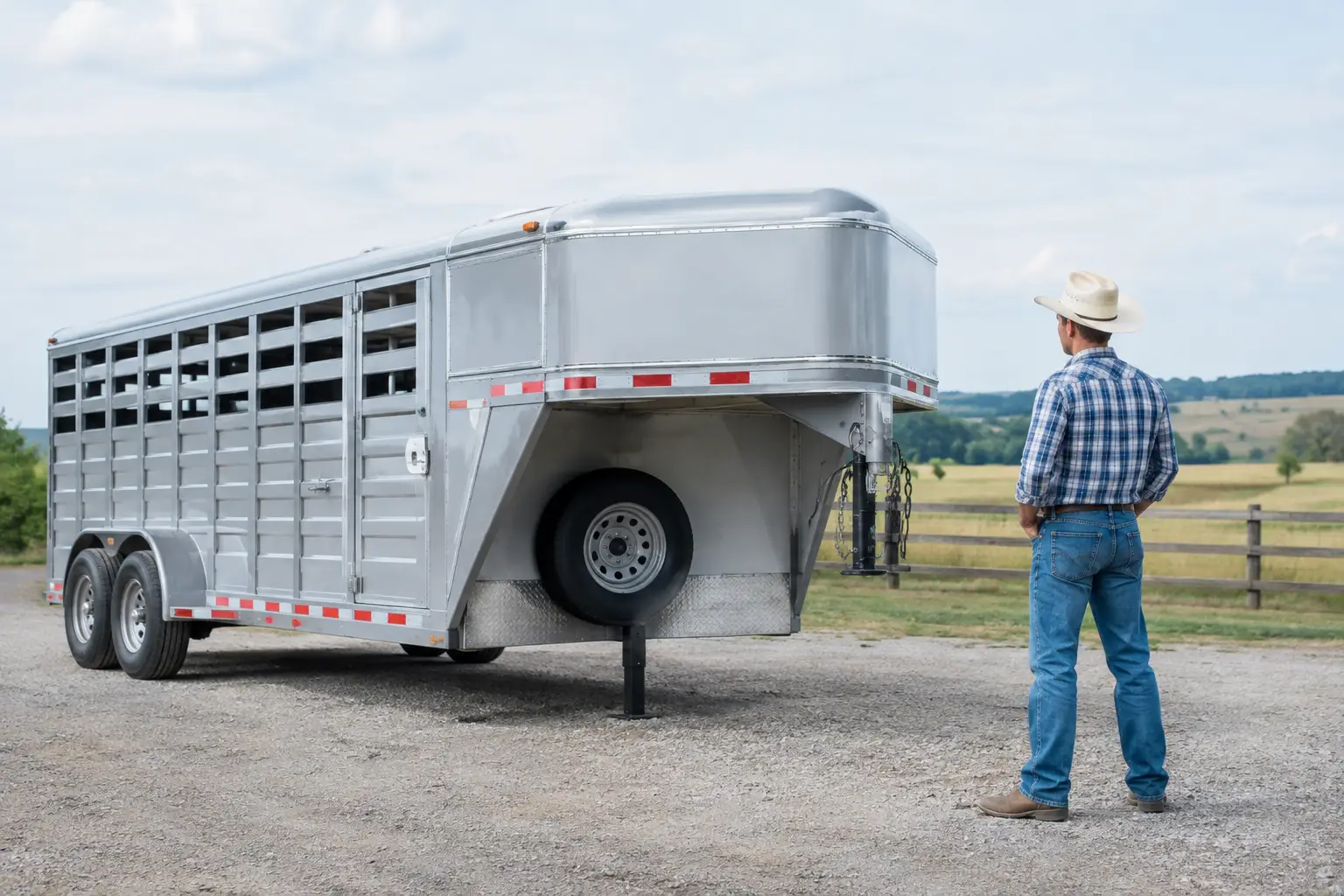
A bargain trailer can get expensive in a hurry when a floor gives way, a tire comes apart 100 miles from home, or the brakes do not do their job on a loaded downhill grade. When you find a used livestock trailer for sale, look past fresh paint and a low asking price. You are buying the piece of equipment responsible for getting live animals down the road safely.
A used trailer can be a sound purchase for a cattle producer, horse owner, small ruminant operation, or homestead. Many older trailers were built heavy and have years of use left. But livestock trailers live a hard life. Manure, urine, mud, salt, weather, loading impacts, and long stretches of sitting all take their toll. The right inspection protects your stock, your truck, and your wallet.
Start With the Job the Trailer Has to Do
Before calling a seller, be clear about what you plan to haul. A trailer that works fine for a handful of goats may not be enough trailer for a load of mature cows. A horse trailer has different needs than a stock trailer, even when the outside dimensions look similar.
Think about animal type, average load size, trip distance, and how often you haul. A producer making short runs to the local vet or sale barn may be comfortable with a basic bumper-pull stock trailer. Someone hauling pairs, breeding stock, or show animals across several states may need more capacity, better ventilation, dividers, and a gooseneck setup.
Do not buy based on trailer length alone. Check the gross vehicle weight rating, axle ratings, empty weight, and your truck's actual tow rating. Payload and tongue weight matter, too. A trailer may be physically large enough for the load but still be over its rated capacity. That is not a paperwork issue. It is a safety issue.
Inspect the Used Livestock Trailer for Sale in Person
Real photos are useful for narrowing the field, but they are not an inspection. If possible, see the trailer in daylight on level ground. Ask the seller not to pressure-wash it immediately before you arrive. You want to see the actual condition, including rust, manure staining, worn paint, and patched areas.
Bring a flashlight, work gloves, a tire gauge, and clothes you do not mind getting dirty. If you are not comfortable judging a trailer, bring somebody who has pulled and maintained them. A second set of eyes is cheaper than replacing a floor or rebuilding an axle.
Check the floor from above and below
The floor is where livestock stand, shift weight, paw, and load manure. It deserves the closest look. Walk every section of the floor. Soft spots, sagging, loose boards, cracked welds, and uneven surfaces are warning signs. Pay special attention near the rear door, over the axles, along the walls, and under rubber mats where moisture can sit unseen.
Wood floors can be serviceable if boards are solid and properly supported. Aluminum floors resist rot but can corrode, crack, or wear thin. Steel floors are durable but vulnerable to rust, especially where urine and moisture collect. Look underneath with a flashlight. A floor that looks acceptable from the top can be badly compromised from below.
Ask whether the floor has ever been replaced and when. A documented replacement is not automatically bad. In many cases, it is a sign the owner kept up with maintenance. What matters is whether the work was done correctly and whether the crossmembers are sound.
Look hard at the frame, roof, and walls
Surface rust is common on an older steel trailer. Rust that has eaten through structural tubing, crossmembers, fenders, or suspension mounts is another matter. Look for fresh undercoating or paint that may be hiding repairs. Check welds for cracks, especially around the coupler, tongue, gooseneck, axle hangers, ramps, and gate hinges.
Inside, inspect the walls for sharp edges, broken rivets, protruding fasteners, and bent panels. Animals do not need much room to get cut up. Open every gate and door. They should latch securely without needing to be forced into place. If the trailer has a center gate, make sure it swings, latches, and holds under pressure.
Check the roof from the inside for daylight, water staining, and loose insulation. A leaky roof may not stop a local haul, but it can make for miserable animals and deteriorating flooring over time.
Tires, wheels, bearings, and brakes are not optional
Do not judge tires by tread alone. Read the DOT date code on the sidewall. Old tires can look nearly new and still fail under load. Cracks, bulges, weather checking, mismatched tire sizes, and uneven wear all deserve questions. Confirm that tire load ratings match the trailer's rated capacity.
Inspect wheels for cracks and missing lug nuts. Ask when the bearings were last serviced. If the owner does not know, budget to service them before putting serious miles on the trailer. With the trailer safely supported, check for excessive wheel play.
For electric brakes, connect the trailer to a truck with a working brake controller and test the system. The breakaway battery and cable should be present and functional. On a short test pull, the trailer should track straight, brake evenly, and not jerk, sway, or make grinding noises. A seller who will not allow a reasonable test is giving you useful information.
Match the Hitch to Your Truck and Hauling Routine
Bumper-pull trailers are simpler, often less expensive, and practical for lighter loads. They are a good fit for many small farms and occasional hauling jobs. Goosenecks generally offer better stability and capacity for larger livestock loads, but they require the right truck bed setup and usually a more capable pickup.
Check the coupler, safety chains, jack, breakaway switch, and electrical connector. A bent coupler, sloppy jack, or damaged plug may be repairable, but it should affect the price. Make sure the trailer's connector works with your truck or factor in the cost of updating it.
Also measure before you buy. Confirm that a gooseneck will clear your truck bed rails and tailgate configuration. Verify that the trailer height works for your animals. Loading a tall horse or a horned cow into a trailer with poor clearance is asking for trouble.
Ask for the Paperwork Before You Arrange Hauling
Title and registration rules vary by state, but the basic principle is simple: know what paperwork you need before money changes hands. Ask the seller whether they have a clear title, registration, bill of sale, and any lien release that applies. Confirm that the vehicle identification number on the paperwork matches the VIN plate on the trailer.
Be careful with a missing, altered, or unreadable VIN. A low price does not make a title problem go away. If your state does not title certain trailers, get a detailed bill of sale with the seller's name, address, date, trailer description, VIN, purchase price, and both signatures.
If the trailer has had major repairs, ask for receipts. If it has sat unused for years, assume it needs a full going-over before hauling animals. Sitting can be as hard on tires, brakes, wiring, and bearings as regular use.
Price the Trailer as It Sits, Not as You Hope It Will Be
A used trailer price should reflect condition, not just brand name or shiny paint. A well-kept older name-brand trailer with solid floors, current tires, working brakes, and clean paperwork may be worth more than a newer trailer that needs immediate work.
Make a repair list while you inspect. Tires, brakes, lights, flooring, gate hardware, wiring, and bearings add up fast. If the trailer needs several of those items, calculate the likely cost before making an offer. Be fair about normal wear, but do not pay turnkey money for a project.
When buying direct from an owner, ask plain questions: What has been repaired? What does not work? When was it last hauled loaded? Why are you selling it? Straight answers matter. So do real photos that show the floor, underside, tires, gates, and VIN area instead of only the clean side parked in the yard.
BarnBridge gives buyers a way to search owner-listed trailers by location and speak directly with the person who has used the equipment. That direct conversation is where you can learn whether the trailer hauled cattle every week, sat behind a barn for five years, or was maintained like it was going to leave home tomorrow.
Plan the First Trip Like a Shakedown Run
Even a trailer that checks out should not go straight into a long loaded haul without preparation. Before the first trip, inspect lights, brakes, tire pressure, lug torque, coupler engagement, chains, breakaway cable, gates, and floor condition one more time. Carry a spare tire that actually fits, a working jack, lug wrench, wheel chocks, and basic hand tools.
For the first loaded trip, keep the distance reasonable if you can. Stop after a few miles and check wheel hubs for excessive heat, look at the hitch, and make sure gates remain secure. Livestock shift their weight, and small problems show up fast once a trailer is loaded.
The best used livestock trailer is not necessarily the newest one or the cheapest one. It is the one that fits your stock, matches your truck, has honest condition behind it, and is ready to work without gambling on the next mile.
See what your machine is worth
Listings are free and livestock sells at 0% commission. Buyers contact you directly.