How to Buy Cattle Directly From a Rancher
Published September 24, 2026
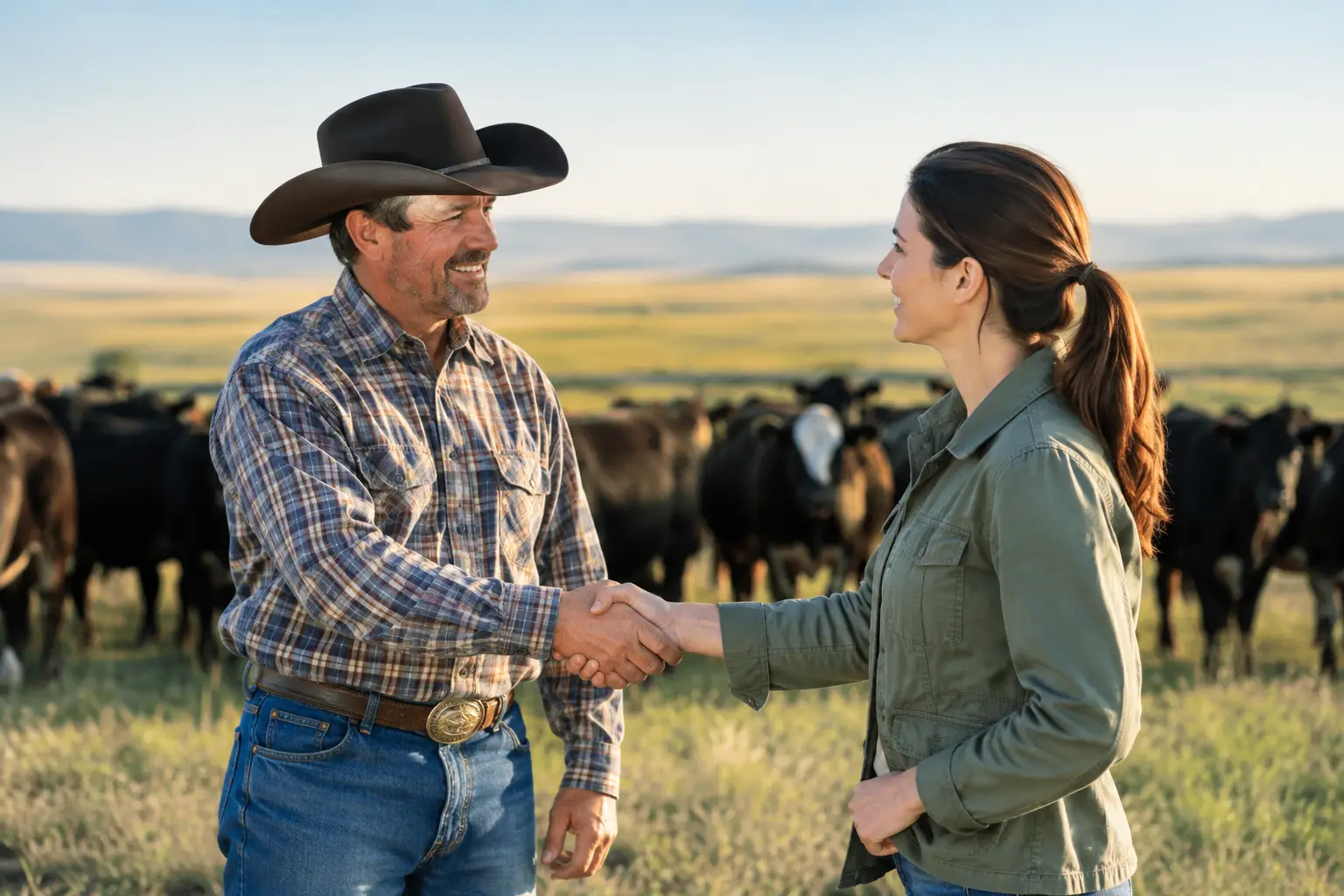
A cattle deal can look good in a photo and still be the wrong fit once the trailer gate drops. When you buy cattle directly from a rancher, you get a better look at the cattle, their history, and the person who raised them. You also take on the work a sale barn, order buyer, or dealer might otherwise handle: asking questions, inspecting cattle, arranging paperwork, and getting them home right.
That is not a downside. It is the point of a direct deal. A good private-treaty purchase lets both sides talk plainly about condition, management, price, and pickup before money changes hands.
Why Buy Cattle Directly From a Rancher?
Direct buying can give you information that does not always travel through a ring. A rancher may be able to tell you what mineral program the cattle are on, whether calves were fence-line weaned, what bulls were used, when cows calved, and how the group handles on foot or horseback. That information has value, especially when you are building a cow herd, stocking a place for the first time, or trying to keep a uniform program.
There can also be less money lost to middle layers. A direct transaction does not automatically mean cheaper cattle. Good cattle still bring good money. But when a seller can list at a fixed price without a livestock commission, there may be more room for a fair owner-to-owner deal than there is after trucking, yardage, commission, shrink, and resale margin have piled up.
The trade-off is simple: you need to be your own buyer. Do not assume a ranch name, a polished listing, or a low price tells the whole story. Real photos, direct answers, and an in-person look matter.
Start With the Job the Cattle Need to Do
Before calling a seller, write down what you need the cattle to accomplish. A set of bred cows for a spring-calving commercial herd is not the same purchase as a few gentle cows for a small homestead. Likewise, a buyer seeking stout feeder calves for a backgrounding program will judge cattle differently than someone wanting replacement heifers.
Set your range for type, age, frame, weight, breed influence, condition, and number of head. Decide whether you need registered stock, commercial females, pairs, bred cattle, open heifers, bulls, or feeder cattle. Be honest about your grass, feed supply, working facilities, labor, and marketing plan. Buying bigger, harder-keeping cattle than your place can support is an expensive way to learn a lesson.
Your budget should include more than the asking price. Figure hauling, health work, testing, feed, insurance if applicable, and the cost of a bad surprise. A cheap cow that arrives open, lame, or wild is rarely cheap.
Read the Listing Like a Buyer
A useful cattle listing should state the basics: head count, location, class of cattle, approximate weight or age, price terms, and pickup expectations. Better listings also show the cattle in pens or pasture, not just one flattering close-up.
Look for specifics rather than sales language. “Bred cows, due March 1 to April 15, exposed to registered Angus bull” is useful. “Nice young cows, ready to go” leaves too much unanswered. If weights are offered, ask whether they are actual scale weights, tape weights, or estimates. If the cattle are priced by the head, clarify whether the price applies to every animal or whether there is sorting involved.
Geographic search makes a difference here. A lower price several states away can disappear after fuel, hired hauling, health papers, and time off the farm. On a nationwide owner-to-owner marketplace such as BarnBridge, a buyer can search beyond the local sale barn while still keeping freight and pickup practical.
Questions to Ask Before You Hook Up the Trailer
A phone call should save both parties a wasted day. Ask plainly, and listen for clear answers. A serious seller should not be bothered by reasonable questions about cattle they are asking you to buy.
For breeding cattle, ask about age, calving dates, breeding exposure, pregnancy status, bull turnout and pull dates, vaccination history, and whether there have been any calving or udder issues. If a cow is represented as bred, find out who confirmed it and when. A veterinarian pregnancy check carries more weight than a guess based on appearance.
For feeder cattle, ask whether they are weaned, how long they have been weaned, whether they are bunk broke, what vaccines they have received, and whether they have been preconditioned. Ask how they have been eating and whether they have been treated recently. A group that has just been weaned, hauled, vaccinated, and commingled can need more management than a buyer expects.
Also ask about disposition. “Gentle” means different things on different places. Ask whether cattle have been worked through a chute, handled by dogs, sorted on foot, or exposed to ATVs. If you have modest facilities or inexperienced help, cattle that are honest and manageable are worth paying for.
Inspect the Cattle, Not Just the Story
Whenever practical, inspect the cattle before final payment. Walk through the group in a pen or pasture. Watch them travel. If the cattle can be run through the chute safely, that gives you a closer look at eyes, mouths, udders, feet, brands, tags, and body condition.
Pay attention to the group as a whole. One thin, lame, or sick animal can be an exception. Several can be a pattern. Do not let a seller rush you past concerns simply because another buyer is supposedly on the way.
For a closer inspection, look for:
- Sound feet and legs, with no obvious swelling, limp, or severe hoof problems.
- Clear eyes, normal breathing, and no heavy nasal discharge or persistent coughing.
- Body condition that matches the seller's description and your feed resources.
- Clean, functional udders on cows and no obvious structural problems in replacement females.
- Tags, tattoos, brands, or other identification that matches any registration or health paperwork.
If you are buying a breeding bull, be even more particular. A breeding soundness exam, current health information, structural soundness, libido history, and a look at his feet are not optional details. One bull can affect a large share of your calf crop.
Price the Cattle on Facts, Not Hope
Use current local and regional market conditions as a reference, but price the actual cattle in front of you. Weight, condition, pregnancy stage, genetics, uniformity, health work, disposition, location, and delivery all affect value. A set of uniform, vaccinated, weaned calves may deserve a premium over fresh-weaned calves of the same average weight.
For bred females, confirm whether the price reflects a short, defined calving window or a long exposure period. For pairs, look at the calf age and whether the cow has enough milk and condition to carry herself. For feeder cattle, decide whether you are paying by the head or by the pound, and make sure both parties understand the scale and shrink terms.
There is nothing wrong with making an offer. Keep it tied to something real: hauling distance, a mixed-age group, missing records, condition, or a quantity purchase. Lowballing a good rancher after they have answered every question is a quick way to lose a source you may want to buy from again.
Handle Health Papers, Ownership, and Payment Clearly
Cattle paperwork varies by state, class of livestock, and destination. If cattle are crossing state lines, ask early about a certificate of veterinary inspection, official identification requirements, brand inspection rules, testing, and entry permits. The buyer should verify destination-state requirements before pickup, not while the truck is waiting at the gate.
Get a bill of sale that identifies the buyer and seller, date, number and type of cattle, price, payment method, and any stated terms. If animals are registered, verify transfer requirements and that the seller can transfer the papers. If brands are common in the area, make sure ownership documentation is handled the way your state requires.
For payment, use a method both sides can verify. Cash, a cashier's check verified with the issuing bank, or a bank wire confirmed before loading are common options. Be cautious with screenshots, overpayment stories, third-party pickup arrangements, and anyone pushing you to send money before you have confirmed the cattle and seller. A direct deal works best when the details are boring and documented.
Plan Hauling Before the Deal Is Final
Confirm loading facilities, pickup time, trailer access, and whether the seller can sort and load the cattle you agreed to buy. A narrow driveway, muddy lot, or no working pens can turn an easy pickup into a long afternoon.
Bring a clean trailer with enough room, good tires, secure gates, bedding when conditions call for it, and water plans for longer hauls. Once home, have a pen ready with safe fence, clean water, hay or feed they recognize if possible, and room to settle. New cattle need a quiet arrival more than they need to be pushed through a chute the first hour.
The best direct cattle purchases usually start with an honest conversation and end with a clean loadout. Find cattle that fit your operation, ask the questions that matter, inspect what you are buying, and leave enough room for the seller to want to answer when you call next season.
Got stock to sell?
Listings are free and livestock sells at 0% commission. Buyers contact you directly.