Dealer Versus Owner Equipment Pricing: What Wins?
Published November 4, 2026
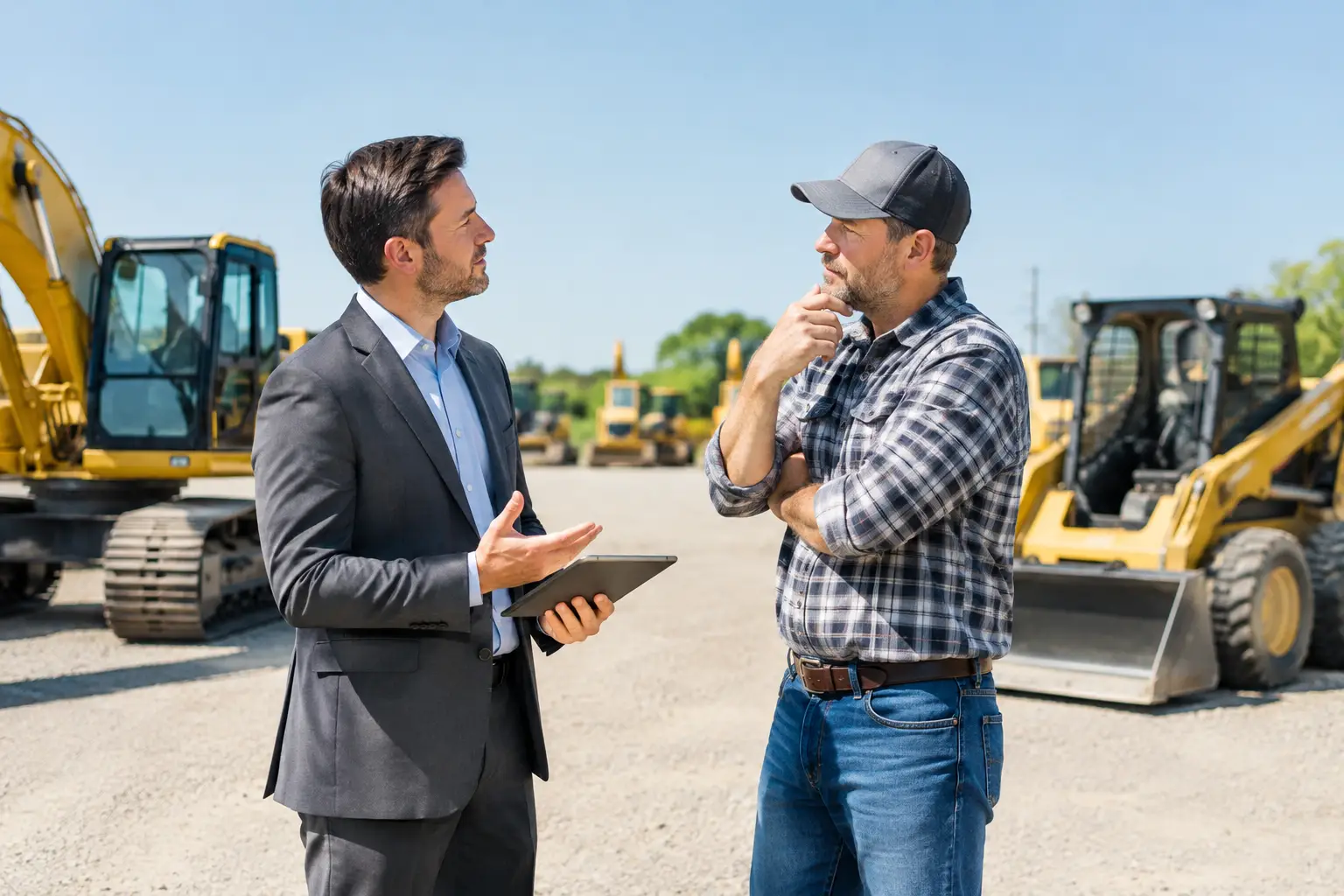
That used baler listed at $18,000 may not really be an $18,000 purchase. It might come with a dealer inspection, trade-in paperwork, financing options, and somebody to call if it quits in the first week. Or it may be sitting in a neighbor’s shed with a lower asking price, a stack of service records, and an owner who can tell you exactly why the left pickup bearing was replaced. Dealer versus owner equipment pricing is not just a question of who has the lowest number on the windshield. It is about what comes with the machine, what you can verify, and what risk you are willing to take on.
For farmers, ranchers, and homesteaders, the right answer depends on the piece of equipment and how badly downtime would hurt. A chore tractor needed every morning deserves a different buying standard than an older hay rake used a few weekends each summer.
What Dealer Versus Owner Equipment Pricing Really Includes
A dealer price often looks higher because it carries business overhead. The dealership may have transported the machine, cleaned it up, repaired obvious issues, paid a technician to inspect it, advertised it, and held it in inventory. Depending on the dealer and the machine, the asking price may also reflect a limited warranty, financing availability, trade-in value, or help locating parts.
That does not mean every dealer machine is fully reconditioned. “Shop checked” can mean very different things from one lot to another. Ask what was actually inspected, what was repaired, and whether the hour meter was verified. If a dealer says a tractor is ready to work, get specific about tires, fluids, electronics, hydraulics, PTO operation, and known faults.
An owner-priced machine usually has less built-in overhead. A private seller is not paying sales staff, a service department, a large lot, or a margin on a trade. That can create a real price advantage, especially when an owner needs shed space or has already replaced the machine.
But owner pricing can also be all over the map. One seller knows the market and prices fairly. Another is anchored to what they paid ten years ago, what a newer model costs, or the value they place on their own repairs. The asking price is a starting point, not proof of value.
Why a Lower Owner Price Is Not Always the Better Deal
Suppose a private seller has a skid steer listed for $4,000 less than a comparable unit at a dealer. That spread may be a bargain. It may also be the cost of replacing worn tires, repairing a leaking drive motor, hauling it home, and losing two weeks during a busy season while waiting on parts.
The question is not, “Which one costs less today?” Ask, “What will this machine cost me after it is ready to do my work?” Add the purchase price, hauling, likely repairs, replacement wear parts, taxes where applicable, and the value of your own time. If you need to borrow money, include the financing terms too. A lower cash price can disappear fast under a high-interest note.
On the other hand, paying dealer retail for a simple, easy-to-inspect implement may not make sense. A solid older box blade, field cultivator, gravity wagon, or livestock trailer can often be bought directly from an owner with little mystery if you inspect it well. There are fewer expensive systems hiding trouble, and replacement parts may be straightforward.
The machine matters. So does the season. An extra $2,500 for a dependable haybine may be justified three days before a good hay window. That same premium may be hard to defend on a secondary implement you can repair over the winter.
Condition outranks the paint job
Fresh paint, washed tires, and a clean cab can help a machine sell. They do not tell you whether it has been maintained. With owner listings, you may get the most useful information from a seller who ran the equipment themselves. They can often explain cold-start behavior, what implement it pulled, how it was stored, and which repairs were done recently.
Look for real photos, including worn areas and serial-number plates. Ask for cold-start video when possible. Inspect the machine in person before money changes hands, especially on tractors, skid steers, combines, balers, and powered livestock equipment. Check fluids, hoses, pins, welds, tires, belts, bearings, hydraulic function, lights, brakes, and safety equipment. Run it through the jobs it is supposed to do.
A seller who says “sold as-is, where-is” is being clear about the transaction. That is normal in used farm equipment. It does not remove your responsibility to inspect, and it does not excuse a seller from being dishonest about a known major issue.
When Paying a Dealer Premium Makes Sense
A dealer premium can be money well spent when the machine is complicated, expensive to repair, or essential to your operation. Modern tractors, combines, sprayers, self-propelled equipment, and late-model skid steers can carry expensive electronic, hydraulic, and emissions-system problems. Dealer access to diagnostic tools, service history, parts, and a technician may have real value.
It can also make sense when you have a trade-in. The dealer’s purchase price may be higher, but a fair trade allowance, lower hauling burden, and simplified paperwork can narrow the gap. Compare the whole deal, not only the advertised price of the machine you are buying.
Financing is another reason. Private sales are commonly cash, bank check, or direct bank financing. A dealer may offer a more convenient path, but convenience has a cost. Read the rate, term, fees, and total amount paid. Do not let a manageable monthly payment hide an overpriced machine or a long note on equipment that is already near the end of its useful life.
Ask whether the dealer will stand behind any claim made during the sale. A written, limited warranty is worth more than a handshake promise. If there is no warranty, treat the unit as used equipment and price it accordingly.
When Buying Direct From an Owner Makes Sense
Direct owner sales are often strongest when you know the equipment class, can inspect it, and are willing to handle the transaction yourself. You can speak to the person who used it, see the farm where it was kept, and get answers without a middleman. That direct conversation can reveal far more than a generic condition report.
Private sales also give buyers room to negotiate around the actual condition. If a mower needs blades and a trailer needs tires, you can put a number to those needs and make a straightforward offer. Sellers benefit too: they can set a fixed price, show honest photos, and deal directly with buyers instead of giving up margin to a dealership or broker.
BarnBridge is built around that kind of owner-to-owner transaction, with direct listings and equipment auctions that keep fees clear instead of burying them in the deal. Still, the buyer needs to do the same careful work: inspect, ask questions, confirm ownership, and arrange payment and hauling on terms both sides understand.
Compare the Same Machine, Not Just Similar Listings
Used-equipment pricing gets distorted when buyers compare machines that only look alike from a distance. Two tractors with the same horsepower and model year may be thousands of dollars apart for good reasons. One may have a loader, better tires, dual remotes, documented maintenance, low verified hours, and no active fault codes. The other may need immediate work.
Before deciding a dealer or owner is overpriced, compare the details: model and year, actual hours, attachments, tire or track condition, service records, known repairs, storage, location, title or ownership documents, and delivery costs. Check whether the serial number matches the paperwork. For trailers and titled equipment, confirm the title is clear and signed correctly before you haul it away.
It also helps to look at several listings across a reasonable radius. A machine in a dry region may have less corrosion. A machine in a high-demand hay area may bring more during the season. Distance matters, but a cheap purchase can stop being cheap once you account for a long haul, a missed inspection, or the risk of buying unseen.
Set Your Walk-Away Number Before You Call
Whether you buy from a dealer or an owner, decide your maximum all-in number before the conversation gets moving. Build in a repair reserve for used equipment. The older and more complex the machine, the larger that reserve should be.
Then let the inspection guide your offer. Be respectful and plain about what you found. “The tires are near the end, the hydraulic coupler leaks, and I have to haul it 250 miles. I can do this number” is a better negotiation than arguing that every comparable listing is too high.
A fair used-equipment deal leaves both sides clear on the condition, price, payment, pickup date, and what is included. The best machine is rarely the cheapest ad or the fanciest lot. It is the one you can verify, afford to put to work, and keep working when the job cannot wait.
See what your machine is worth
Listings are free and livestock sells at 0% commission. Buyers contact you directly.