Essential Documents for Livestock Purchases
Published October 17, 2026
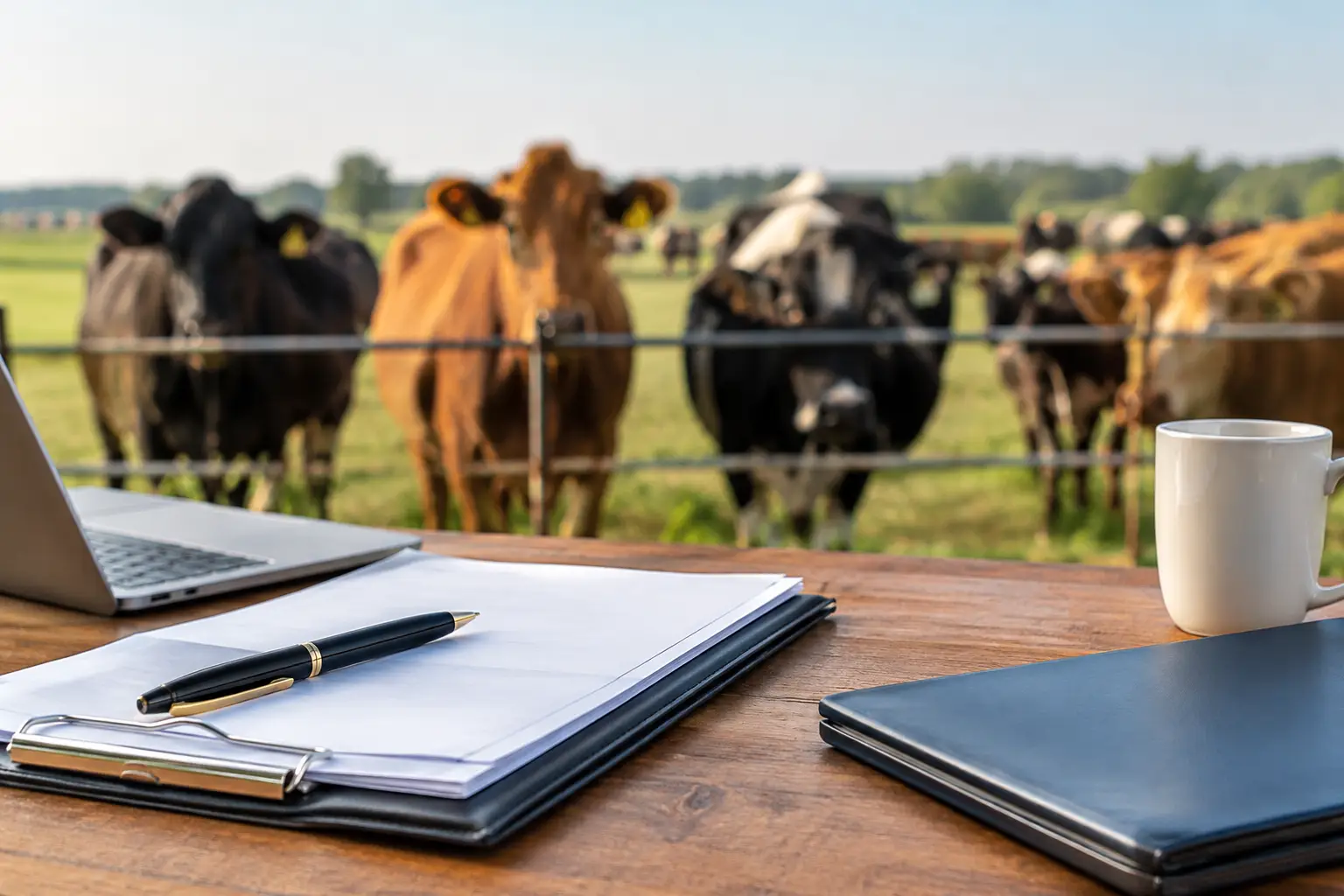
A good set of cattle can turn into an expensive mess if the paperwork does not match the animals on the trailer. The essential documents for livestock purchases are not just office work. They establish ownership, support legal movement, protect herd health, and give both sides a clear record of what was agreed to before money changes hands.
Private treaty deals move fast. A buyer sees real photos, talks directly with the owner, checks the cattle, agrees on a price, and lines up a truck. That is how it ought to work. But before the gate swings open, take a few minutes to make sure the documents fit the species, the state line, and the purpose of the animals.
Start With a Detailed Bill of Sale
For most livestock purchases, the bill of sale is the one document you should never skip. It is the basic proof of the transaction and should travel with the buyer, not stay in somebody's truck console.
A useful bill of sale identifies the buyer and seller by full name, address, and phone number. It states the sale date, purchase price, method of payment, and where the animals changed hands. It should also describe what was sold well enough that a stranger could connect the paper to the livestock.
For cattle, that may mean head count, breed, sex, approximate age, color, brands, ear tag numbers, tattoos, or official identification numbers. For sheep and goats, include flock tags or tattoos. For horses, record the registered name if applicable, age, color, markings, and microchip number. If you are buying a bred female, write down the claimed breeding status, service sire information, and expected calving, foaling, or kidding date if known.
Keep the condition language plain. Many private livestock sales are sold as-is, where-is after buyer inspection. If the seller is making a specific guarantee, put it in writing. Examples include a confirmed pregnancy status, a negative test result, registration eligibility, or a stated health treatment. Do not rely on "he told me" after the animals are home and the story changes.
Essential Documents for Livestock Purchases Across State Lines
The paperwork gets more serious when livestock cross a state border. Requirements vary by destination state, species, age, sex, and intended use. Breeding animals, dairy cattle, exhibition stock, and animals entering a feedlot can be treated differently under the same state rules.
Certificate of Veterinary Inspection
A Certificate of Veterinary Inspection, often called a CVI or health certificate, is commonly required for interstate movement. A USDA-accredited veterinarian issues it after examining the animals and documenting required identification, origin, destination, and health information.
Do not assume a clean-looking animal is enough. Some states require a CVI for nearly every interstate move, while others allow limited exceptions. Timing matters too. Health certificates are generally valid for a set number of days, not forever. If hauling gets delayed, confirm that the certificate will still be valid when the load arrives.
Ask the seller before the deal is final who will arrange and pay for the veterinary inspection. That answer can affect the total cost, especially for a small purchase or a long haul.
Entry Permits and Import Requirements
Some states require an entry permit number before certain livestock can cross the line. The permit may need to appear on the CVI. Destination states can also require official identification, disease testing, vaccination records, or additional paperwork for particular classes of animals.
The buyer should check the destination state's current livestock entry rules before committing to a pickup date. The seller may know the local process, but the buyer is the one bringing animals into a new herd and a new state. Rules can change during disease investigations or movement restrictions, so last year's answer is not always good enough.
Official Identification Records
Official identification is especially relevant for cattle, sheep, goats, and other regulated species. Depending on the transaction, that may include an official 840 tag, metal tag, tattoo, or another approved identifier. The paperwork should match the identifiers actually on the animal.
Take clear photos of tags, tattoos, brands, and the full animal at loading. Photos are not a replacement for documents, but they are useful when a tag gets lost, a trailer is delayed, or a question comes up later about which animals were delivered.
Ownership and Transfer Papers That Depend on the Species
Not every animal needs registration papers, but when those papers are part of the value, treat them like part of the livestock purchase price.
For registered cattle, sheep, goats, hogs, or horses, ask for the original registration certificate or the association's approved transfer paperwork. Confirm that the seller is the recorded owner and that the animal's tattoo, brand, or other permanent identification matches the certificate. A registration paper that cannot be transferred to the buyer is not the same thing as a transferred registration.
Horses deserve extra attention. Along with a bill of sale, buyers may need a signed registration transfer, breed association forms, a current negative Coggins test, and vaccination records. A brand inspection may also be required in states that use them. If the horse is represented as sound, trained, bred, or suitable for a particular job, spell out any written guarantees rather than leaving them to a handshake.
For cattle in brand states, a brand inspection or ownership inspection can be mandatory for movement or sale. This document helps verify ownership and can be required even when both parties know each other. Do not confuse a brand inspection with a bill of sale. One may not replace the other.
Health Records Are More Than a Courtesy
Health records can be the difference between a manageable arrival and a wreck in the receiving pen. Ask for the herd health protocol, vaccination history, deworming dates, implant history when relevant, and any recent treatment records. For breeding stock, ask about reproductive exams, pregnancy checks, bull breeding soundness exams, and genetic test results if those claims were used to set the price.
Test documentation matters when the animals are sold with a disease-status claim. Depending on the species and purpose, that could include brucellosis, tuberculosis, Johne's disease, bovine viral diarrhea, equine infectious anemia, or other testing. A verbal claim that a herd is "clean" is not a test result. Ask what was tested, when it was tested, and whether the paperwork applies to the actual animals being purchased.
For sheep and goats, maintain records of official scrapie identification and any flock health status paperwork. For swine and poultry, movement records, premises information, testing, and disease-control requirements may be more central than a traditional individual-animal bill of sale. The right document depends on the species.
Protect the Payment and the Pickup
Paperwork should also show that the money and livestock changed hands as agreed. If paying by check, wire, cash, or cashier's check, both sides should keep a receipt showing the amount and date. If a deposit is involved, write down whether it is refundable, what holds the animals, and the deadline for final pickup.
If the livestock are financed, leased, or subject to a lien, ask direct questions before loading. A seller should have the right to sell the animals free of another party's claim. This issue comes up less often in neighbor-to-neighbor deals, but it is too costly to ignore on larger purchases. When there is any doubt, get written confirmation from the lender or lienholder.
At pickup, compare head count, sex, tags, and condition against the bill of sale before the trailer leaves. Count again at delivery. If the parties agreed on a weigh-up, use the scale ticket and note shrink terms, pencil shrink, hauling responsibility, and death-loss terms in writing. Those details are not mistrust. They are how good business stays good business.
Keep a File for Every Purchase
Store the bill of sale, health certificate, permits, registration transfers, test records, payment receipt, and loading photos in one file. A paper folder in the office works. So does a clearly named digital folder backed up somewhere reliable. Keep records long enough to support resale, insurance, tax records, herd health decisions, and any question that surfaces after the sale.
On BarnBridge and in any direct owner-to-owner transaction, good paperwork supports the same thing that real photos and straight answers support: a deal both sides can stand behind. The buyer still needs to inspect. The seller still needs to disclose. Documents simply make the terms harder to forget.
Before you hook onto the trailer, call the state animal health office if the move involves an unfamiliar rule, a state line, or a disease-status claim. Five minutes spent confirming the right paper is cheaper than being turned around at the border or bringing trouble home to the herd.
Got stock to sell?
Listings are free and livestock sells at 0% commission. Buyers contact you directly.