How to Evaluate Trailer Tire Condition Safely
Published October 14, 2026
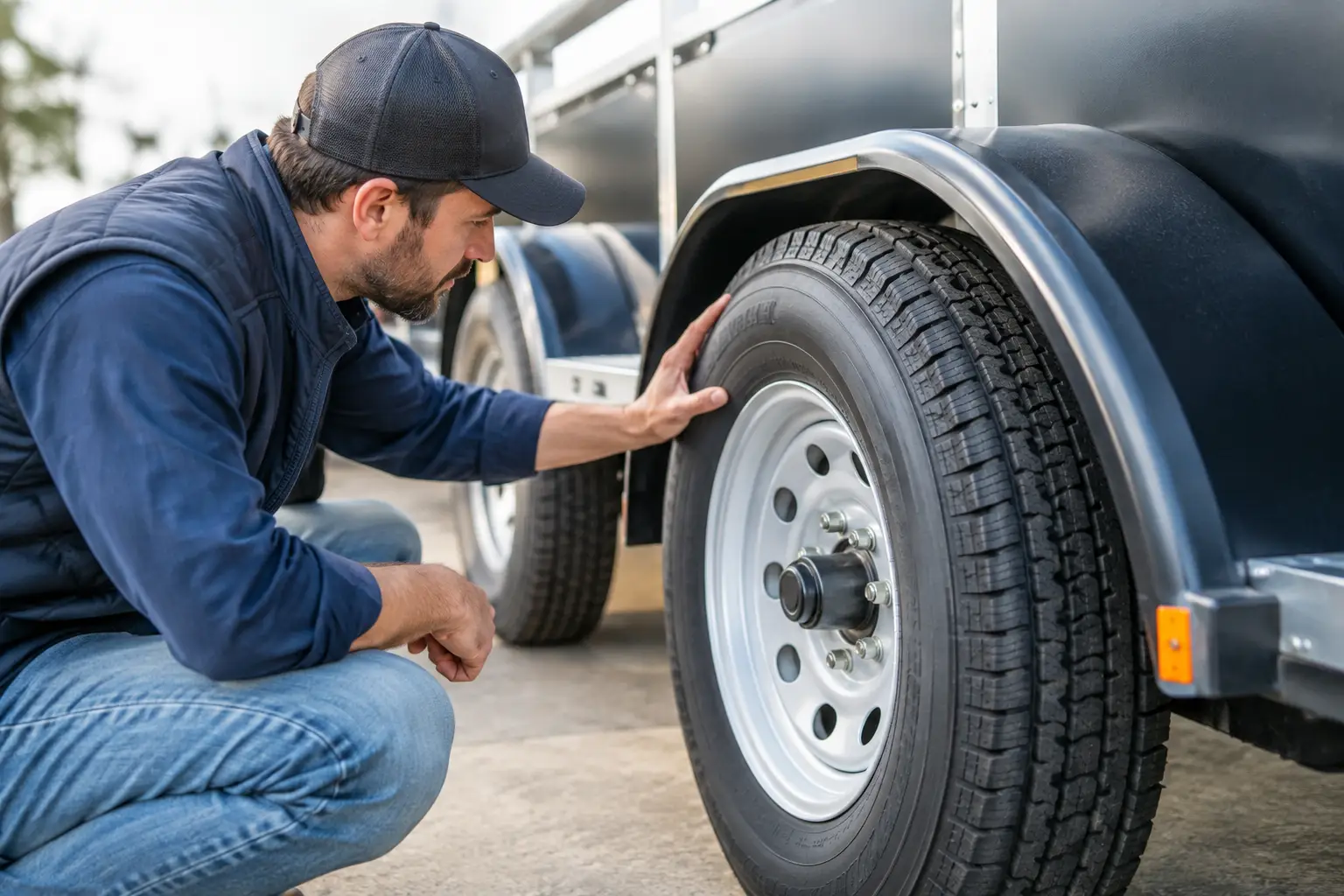
A trailer can look clean, have fresh paint, and still be one hard pull away from a roadside mess. Tires are where a lot of used-trailer deals tell the truth. Before you buy, haul livestock, or post a trailer for sale, take the time to evaluate trailer tire condition with more than a quick look at the tread.
A tire failure is more than an inconvenience when you are hauling cattle, horses, hay, or equipment. A blowout can damage fenders and wiring, leave you stranded on the shoulder, or turn a safe load into a handling problem. Good tires do not make a trailer sound, but questionable tires are a clear reason to slow down and inspect the rest of the deal.
Evaluate Trailer Tire Condition From the Sidewall In
Start with the trailer parked on level ground, unloaded if possible, and take your time. You want to inspect every tire, including the spare. A tire that looks fine from the outside edge may have cracking on the inside sidewall or wear across the tread that only shows up when you get down at eye level.
Check the DOT date code first
Age matters on trailer tires, often as much as tread depth. Most trailer tires do not wear out from highway miles the way pickup tires do. They sit for long stretches, carry heavy loads, see sun and weather, and may be run underinflated. That can dry the rubber from the inside out.
Find the DOT code on the sidewall. The last four digits show the week and year the tire was made. For example, 1523 means the tire was manufactured in the 15th week of 2023. The date code may be on the inward-facing sidewall, so you may need a flashlight or need to crawl under the trailer.
There is no single age that makes every tire automatically unsafe. Storage, climate, use, and condition all matter. Still, tires that are six or more years old deserve close scrutiny, especially if they have spent years outside. A trailer with deep-tread tires from 2015 is not automatically a bargain. It may need a full set before it makes a long haul.
Look for cracks, bubbles, and cuts
Check both sidewalls and the spaces between tread blocks. Fine surface checking can be common on older tires, but deep cracks, cracks that expose cords, separated tread, bulges, or cuts are not something to explain away. A sidewall bubble can mean internal belt damage. Treat it as a replacement tire, not a tire to "watch for a while."
Pay attention around the bead area where the tire meets the rim. Rusty rims can create slow leaks, and a tire that has been run low may show scuffing, wrinkling, or damage near the sidewall. If one tire is noticeably newer than the others, ask why. It may simply have picked up a nail. It can also mean that corner of the trailer has a history of bearing trouble, brake drag, or alignment problems.
Measure tread across the whole tire
Do not judge tread by the outer edge alone. Check the inside, center, and outside of each tire. Uneven wear often points to a problem beyond the tire itself.
Wear concentrated in the center can indicate chronic overinflation. Both shoulders worn more than the center may suggest underinflation or overloading. One-sided wear can point to a bent axle, worn suspension parts, a damaged spindle, or an axle that is out of alignment. Cupping or scalloped wear can come from loose wheel bearings, suspension wear, or a wheel that is not running true.
Use a tread-depth gauge if you have one. A penny is better than nothing, but a cheap gauge gives a clearer answer. More important than an exact number is whether the wear is even and whether there is enough usable tread for the miles and load you plan to pull.
Match the Tires to the Trailer and the Load
A tire can look nearly new and still be the wrong tire for the job. Read the sidewall for tire size, load range, maximum load, maximum cold inflation pressure, and whether it is an ST, LT, or other designation.
ST tires are made specifically for trailer service. LT tires can work on some trailers when they meet the trailer manufacturer's requirements and carry enough capacity, but they are not an automatic substitute. What matters is the actual load capacity, wheel rating, axle rating, and intended use. Do not assume a heavier-looking tire fixes an overloaded trailer.
Add the capacity of all tires on the ground, then compare it with the trailer's gross vehicle weight rating and the load you expect to carry. Remember that tongue weight takes some load off the trailer tires, but uneven loading can put more weight on one axle or one side. A stock trailer hauling cattle does not carry weight the same way as an empty utility trailer hauling home from town.
Also confirm that the wheel is rated for the pressure the tire requires. A load-range E trailer tire commonly needs higher cold pressure than a lighter-duty tire. Installing it on a wheel not built for that pressure creates a problem you cannot see from the road.
Check Pressure, Wheels, and the Ground Around the Trailer
Pressure should be checked cold, before the trailer has been pulled. Use a dependable gauge, not a visual guess. Trailer tires can look reasonably full while being low enough to build damaging heat under load. Follow the tire and trailer manufacturer's specifications, and do not reduce pressure just because the trailer is empty unless the manufacturer specifically calls for it.
While you are down there, inspect the wheels. Look for cracked rims, bent flanges, missing lug nuts, loose-looking studs, and rust around the lug holes. Fresh grease slung across the inside of a wheel, dark streaks from a hub, or a hot hub after a short pull can signal bearing or seal trouble. Those are not tire defects, but they can ruin a good tire fast.
If the trailer has been sitting, look at the ground beneath each wheel. A tire that is low on one side, a flat spot, or a ring of dry-rot debris tells you more than a seller's statement that it has "good tires." Real photos are useful, but an in-person inspection is still the standard when the trailer is going to carry a serious load.
Inspect a Used Trailer Before Money Changes Hands
When looking at a private-sale trailer, ask direct questions before you make the drive. Ask the age of the tires, when they were last replaced, whether the trailer has had a blowout, and whether it has been used at highway speed or mostly around the farm. Ask whether the spare is roadworthy or just present.
At the trailer, inspect tire condition before getting distracted by paint, lights, gates, and extras. If the tires are old or mismatched, price a replacement set into the deal. Four tires, mounting, balancing if needed, valves, and a spare can change what a trailer is really worth.
If possible, pull the trailer for a short drive. Watch whether it tracks straight, bounces, or pulls to one side. After a few miles, stop safely and carefully check for an unusually hot hub or tire. Do not touch hot metal with a bare hand. A non-contact thermometer is handy, but even without one, a hub that is dramatically hotter than the others needs attention.
For sellers, clear tire photos and the DOT date code save time. Show the tread, sidewalls, tire size, and spare. If the tires are older but serviceable, say so plainly. If they need replacement, disclose it and price the trailer honestly. That is how owner-to-owner transactions stay straightforward, whether the trailer is listed locally or reaches buyers through BarnBridge.
Know When to Replace Instead of Negotiate
Some tire issues are worth using as a price discussion. A decent, evenly worn set that is approaching replacement age may justify a lower offer. Other issues should stop the haul until they are corrected: exposed cords, bulges, major sidewall cracks, tread separation, severe uneven wear, or a tire that will not hold air.
Do not try to get one more load out of a clearly failing tire because the trailer is only going a few miles. Short trips still build heat, and the consequences can be worse when you are loaded, on a narrow rural road, or trying to keep livestock settled.
A trailer is only as useful as the condition it is in when the gate shuts and the wheels start turning. Inspect the tires like they matter, because when the load is yours, they do.
See what your machine is worth
Listings are free and livestock sells at 0% commission. Buyers contact you directly.