A Practical Guide to Online Tractor Inspections
Published October 24, 2026
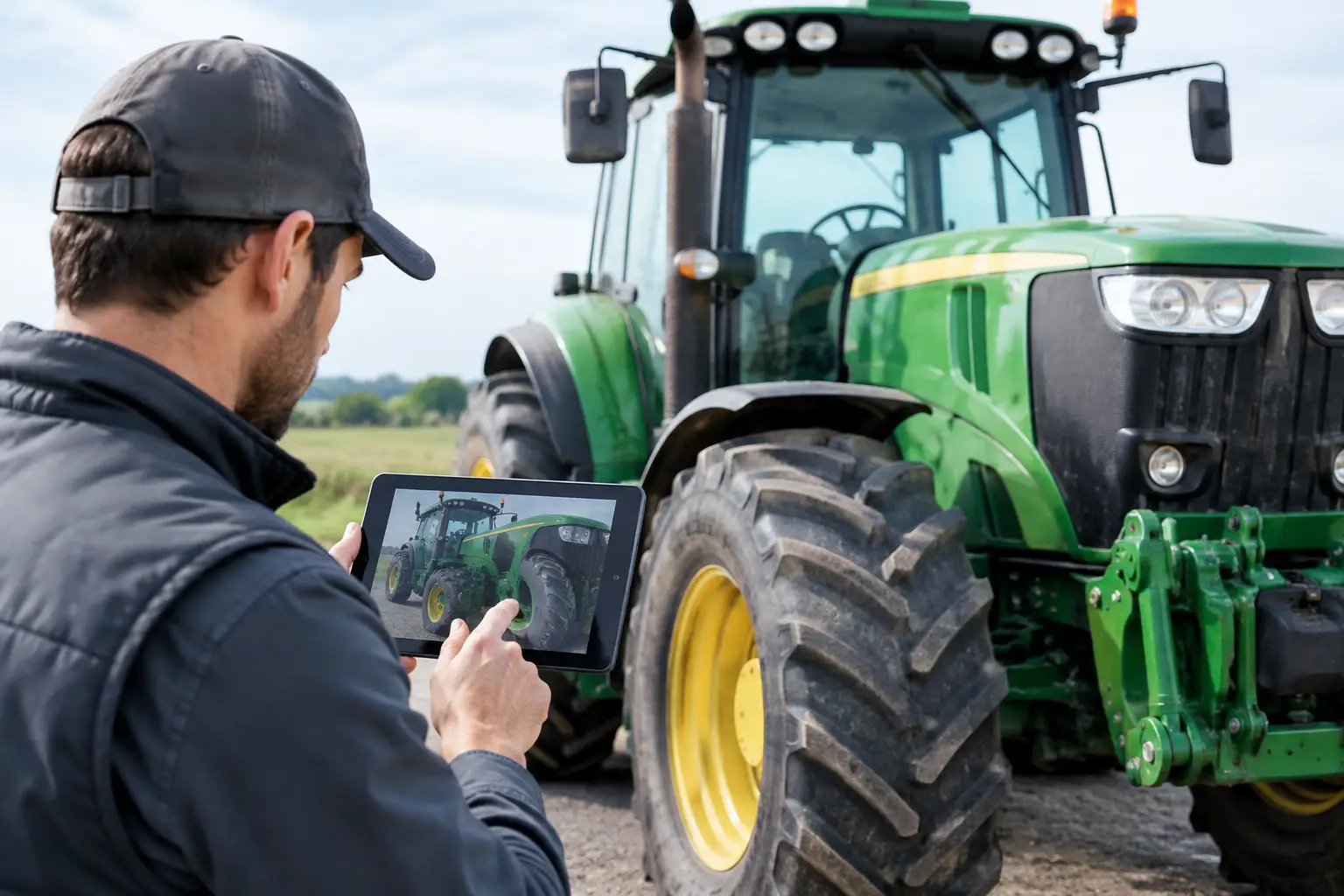
A tractor can look clean in six photos and still need tires, a clutch, hydraulic work, and a new battery before it earns a dollar. That is why a guide to online tractor inspections starts with one plain fact: online research helps you decide whether a tractor is worth pursuing. It does not turn a used machine into a known machine.
For buyers who are covering more ground than their local dealer or sale barn can reach, a good remote inspection saves wasted windshield time. It also gives you better questions, a clearer price ceiling, and fewer surprises when you arrive. The goal is not to catch every flaw from a screen. The goal is to sort honest, workable tractors from listings that need more proof.
Start With the Job, Not the Paint
Before studying a listing, write down what the tractor needs to do. A compact tractor for driveway work, mowing, and light loader chores has different requirements than a 100-horsepower row-crop tractor that must pull a hay baler all summer. Horsepower, weight, hydraulic flow, PTO setup, tire type, lift capacity, and available implements all matter.
A buyer who needs a loader tractor should not get distracted by fresh paint on a two-wheel-drive machine with no loader mounts. Likewise, a low-hour older tractor may still be the wrong fit if parts are scarce or it lacks the hydraulic outlets needed for your equipment. Online inspections work best when you know what would make the machine useful on your place.
Set a total budget before you call. Include the sale price, hauling, taxes where applicable, fluids and filters, likely repairs, and attachments you will need. A tractor that is cheaper two states away can stop being cheaper once hauling and first-round maintenance are counted.
Ask for Real Photos From Every Angle
A single polished side view tells you almost nothing. Ask the owner for current, unedited photos taken in good light. A seller who knows the tractor and is willing to show it straight usually has no problem sending them.
Request wide shots of both sides, front and rear, plus close-ups of the engine compartment, loader frame, three-point hitch, drawbar, PTO stub, hydraulic couplers, tires, seat, controls, dash, hour meter, serial-number plate, and any visible leaks or damage. If an attachment is included, inspect it the same way. A worn bucket cutting edge or cracked mower deck may be manageable, but it belongs in the price.
Look beyond the sheet metal. Dented hoods are common on working tractors and do not automatically mean abuse. Pay closer attention to bent loader arms, crooked steering linkages, welds around the front axle, missing shields, damaged hydraulic cylinders, and oil-soaked areas around seals. Fresh paint over a repair is not always a red flag, but it is a reason to ask what happened and when.
Tires deserve a close look because replacement cost adds up quickly. Ask for tread depth, sidewall photos, matching tire sizes, and clear views of weather checking or cuts. On four-wheel-drive tractors, mismatched front and rear tire sizing can create driveline problems. Do not assume tires are serviceable because they still hold air.
Use Video to Check What Photos Cannot
A walkaround video is one of the best tools in an online tractor inspection. Ask the seller to start the tractor cold if possible, then record the startup, dash, exhaust, idle, throttle response, and operation at working RPM. A warm engine can hide hard-starting issues, so ask directly whether the machine was started before filming.
The video should show the tractor moving forward and in reverse, shifting through its ranges or gears, steering lock to lock, engaging the PTO, raising and lowering the three-point hitch, and operating each hydraulic function. For a loader tractor, have the seller raise it fully, curl and dump the bucket, and hold it in the air for a few minutes. A loader that slowly settles may have cylinder, valve, or hydraulic issues.
Listen for more than engine noise. Grinding during gear changes, whining hydraulics, a clutch that does not release cleanly, or a front axle clicking under a tight turn can point to expensive work. Some gear whine is normal on older equipment. The question is whether the sound is consistent with the tractor's age and design, or whether it changes under load.
Exhaust also needs context. A brief puff of smoke at startup may be normal. Heavy blue smoke after warmup can indicate oil burning. Persistent white smoke can mean unburned fuel, coolant intrusion, or an engine that is not reaching temperature. Black smoke under a hard pull is not unusual on a diesel, but black smoke at light throttle deserves a conversation.
Verify Hours, History, and Identity
An hour meter is useful, not sacred. Mechanical meters can stop. Digital displays can be replaced. A claimed 1,200-hour tractor should show wear that generally fits 1,200 hours: pedals, seat, steering wheel, hitch points, controls, and loader pins should not look like they have spent decades in daily use.
Ask when the seller bought it, what work it has done, why it is being sold, and what has been repaired recently. Specific answers build confidence. “We replaced the water pump last spring and have used it to feed hay” is more useful than “runs great.” Service receipts, operator manuals, and maintenance logs are worth requesting, even if the owner only has partial records.
Confirm the serial number from the tractor itself, not just paperwork or a listing description. Use it to verify the model, approximate build year, engine configuration, and whether the tractor has the options the seller claims. If there is a lien, financed balance, salvage history, or title issue on a tractor or accompanying trailer, deal with that before money changes hands.
Know the High-Dollar Trouble Spots
Every tractor has weak points, and the model matters. Spend a few minutes learning common issues for the exact series before you bid or schedule a trip. Parts availability is just as important as the failure itself. A repairable issue on a common model may be a headache on a rare import with limited dealer support.
Pay special attention to these areas:
- Engine and cooling: Check for blow-by, coolant loss, oil contamination, overheating, weak compression, and evidence of leaks around the head, water pump, or radiator.
- Transmission and clutch: Ask whether every gear engages, whether the tractor slips under load, and whether the reverser, shuttle, or hydrostatic drive operates smoothly.
- Hydraulics and loader: Look for slow functions, jerky movement, wet cylinders, loose pins, cracked mounts, and weak three-point lift capacity.
- Four-wheel drive and steering: Confirm that front-wheel assist engages and disengages properly, and inspect axle seals, steering cylinders, and universal joints.
- Electrical and emissions systems: On newer tractors, ask about warning lights, DEF use, regeneration history, sensor repairs, and whether all gauges and safety switches work.
A seller may not know every answer. That is different from avoiding the question. Be fair about an older tractor's normal wear, but do not price it as ready-to-work if major functions cannot be demonstrated.
Call the Owner and Ask Straight Questions
Text messages are fine for arranging details. A phone call is better for judging how well the owner knows the machine. Ask whether it starts cold, burns oil, uses coolant, leaks after sitting, has any warning lights, and can be put to work today. Ask what does not work, even if it seems minor.
Then ask one question that requires a real answer: “If you were keeping it, what would you fix next?” Honest owners often mention the weak battery, seep at a hose, worn seat, or tire they had planned to replace. That information is not necessarily a deal breaker. It is useful leverage and helps you plan.
On a direct owner marketplace such as BarnBridge, that conversation is part of the inspection. You are not trying to talk through a middleman who has never operated the tractor. You can ask the person who used it, maintained it, and knows why it is for sale.
Decide When an In-Person Inspection Is Necessary
For a low-dollar mower tractor close to home, good photos, video, and a candid owner may be enough to justify a quick visit and purchase. For a high-dollar cab tractor, a machine with unclear hours, or anything that must earn its keep immediately, plan an in-person inspection before final payment.
Bring someone who knows that model if you do not. If travel is impractical, hire a qualified local mechanic or equipment inspector. The cost may feel steep until it uncovers a transmission issue, failed four-wheel drive, or engine problem that would have cost thousands. For an auction purchase, read the terms carefully and understand whether inspection windows are available before bidding. Sold as-is, where-is means exactly that.
When you arrive, inspect the tractor cold, run it long enough to get fully warm, and use it under a load if the owner will allow it. Check fluids before startup and again afterward. Confirm that the serial number matches what you were sent online. If the deal includes implements, test those too.
A good online inspection does not replace common sense. It gives you enough evidence to spend your time and hauling money on the tractors that have a real chance of working out. Buy the machine you can verify, price the repairs you can see, and leave room in the deal for the things no screen can show.
See what your machine is worth
Listings are free and livestock sells at 0% commission. Buyers contact you directly.