Hay Baler Reviews: What Matters Before You Buy
Published October 31, 2026
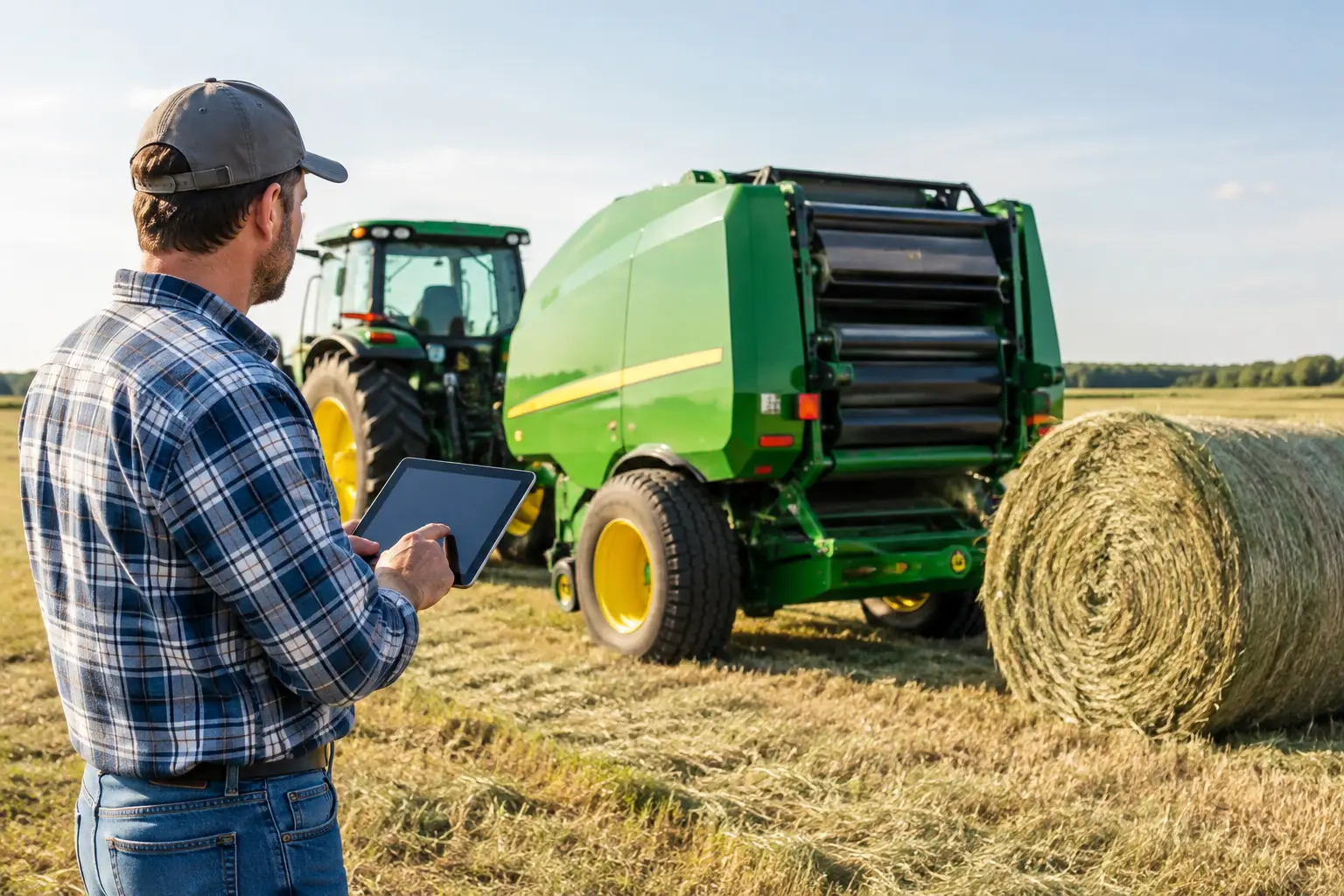
A baler can look clean in the shed, have decent paint, and still cost you a hay season in missed knots, broken chains, and long waits on parts. That is why useful hay baler reviews need to go beyond brand loyalty and horsepower claims. The right baler is the one that fits your crop, acreage, tractor, labor situation, and local repair options.
For a buyer looking at used equipment, the model name matters. The condition of the pickup, bale chamber, knotters or belts, driveline, and electronics matters more. A baler is a working machine, and its weak points tend to show up when the hay is ready and weather is closing in.
Start Hay Baler Reviews With the Bale You Need
The first question is not which make is best. It is what kind of bale your operation needs to make, handle, feed, sell, and haul.
Small square balers still make sense for horse hay, small livestock operations, retail hay customers, and farms where bales are handled by hand or with simple accumulators. They produce a familiar package, but they demand more attention to knotters, timing, and crop flow. If you sell to horse owners, bale consistency and clean flakes can matter as much as hourly output.
Round balers suit many cattle operations because they reduce labor and produce bales that can be moved with a loader or bale spear. They also vary widely. A 4-by-5 baler may be easier for a smaller tractor and simpler to transport, while a 5-by-6 machine can make fewer, heavier bales per field. Bigger is not automatically better if your loader, feeding setup, roads, or customers are built around smaller bales.
Large square balers are a different class of equipment. They can put up serious tonnage and make stacks that haul efficiently, but they require tractor horsepower, dependable operators, good windrows, and a repair budget that matches the capacity. A bargain large square baler is not always a bargain if one major repair erases the savings.
When reading reviews, pay attention to what kind of hay the reviewer runs. Thin grass hay, heavy bermudagrass, dry alfalfa, wet ryegrass, and rough mixed stands do not feed through a baler the same way. A machine praised in light, dry western hay may behave differently in humid, heavy eastern windrows.
Capacity Is More Than Bales Per Hour
Manufacturers and owners often talk about output, but field capacity depends on the whole haying system. A baler that can eat windrows quickly is only useful if the rake makes uniform windrows, the tractor can maintain PTO speed, and someone can move bales out of the field.
Look for reviews that describe real conditions: acres covered, bale size, crop type, moisture range, tractor used, and downtime. “It baled 500 bales without trouble” means more when you know whether those were loose 4-by-4 grass bales or dense 5-by-6 alfalfa bales.
For many owner-operators, a baler that runs steadily at a moderate pace is worth more than a high-capacity machine that needs constant adjustment. If you put up 200 bales a year, buying capacity sized for a commercial crew can add cost and complexity without solving a real problem. On the other hand, if you hire custom help every year because your current baler cannot keep up, added capacity may pay for itself quickly.
What to Look for in Used Hay Baler Reviews
Used-equipment reviews are most valuable when they identify wear points and repair history instead of repeating brochure features. Ask the seller what has been replaced, when it was replaced, and why. “New bearings” is useful information. “Completely gone through” is not enough by itself.
On a round baler, inspect belts for cracks, frayed edges, stretched lacing, patches, and uneven wear. Check rollers and bearings for noise or play. Look over pickup teeth, cam tracks, pickup bands, chains, sprockets, tensioners, and the bale density system. Ask whether the baler has had issues starting a core, wrapping a bale, or ejecting consistently.
On a small square baler, knotters deserve close attention. Inspect billhooks, knives, wiper arms, twine discs, needles, and the plunger area. Ask for proof that it has tied bales recently, preferably in hay similar to yours. A baler that ties reliably in a seller's light straw windrow may need adjustment in dense hay, but it should still demonstrate sound timing and complete knots.
On a large square baler, inspect the plunger, feeder system, knotters, packer components, bale chamber, and driveline carefully. Check for weld repairs around high-stress areas. Review the service records if they exist. These machines can be excellent tools, but repair work often takes more labor, more specialized knowledge, and more money than buyers expect.
A field demonstration is worth more than a fresh wash job. Watch the machine pick up crop, form a bale, tie or wrap it, and eject it. Listen for bearing noise, banging chains, driveline vibration, or repeated alarms. Then get off the tractor and look at the bale. Is it square or uniform? Are the edges firm? Are knots properly formed? Is wrap coverage even? Real photos and a real demonstration beat a polished listing every time.
Parts Support Can Decide the Deal
A baler that has been discontinued for years is not automatically a bad purchase. But it needs a parts plan. Before buying, call the local dealer or independent parts supplier with the model and serial number. Ask about common wear parts, belts, pickup teeth, knotter pieces, bearings, sensors, and net-wrap components. Find out what is routinely stocked and what requires an order.
This is where local support may matter more than brand reputation. A well-regarded machine is still parked if the part you need is three states away during first cutting. Older mechanical balers may be easier for a hands-on owner to keep going, while newer machines can offer better density control, moisture monitoring, and operator information. The trade-off is more sensors, wiring, control boxes, and diagnostic work.
Do not dismiss electronics just because they are electronic. Plenty of modern balers are dependable. Just make sure the monitor is included, functioning, and matched to the machine. A missing display, damaged harness, or unresolved error code can turn into an expensive guessing game.
Match the Baler to Your Tractor and Handling Equipment
Check PTO requirements, hydraulic outlets, electrical connections, drawbar setup, and actual tractor horsepower. Do not rely only on the minimum figure in a brochure. Hilly ground, heavy hay, and a full bale chamber put more demand on a tractor than a flat, dry test field.
Your handling equipment matters too. A heavy 5-by-6 bale may be efficient in the field but awkward if your loader is marginal, your bale spear is light, or your feeding areas turn soft in winter. The same goes for storage. Outside storage, indoor storage, wrapping, and long-distance hauling all affect which bale size makes financial sense.
Questions Worth Asking the Seller
Ask how many bales the machine has made, but treat that number as one part of the story. Hour meters, bale counters, maintenance records, and the seller's general knowledge of the machine should line up. Ask what broke last, what is due next, whether it has been stored inside, and whether it can be demonstrated under power.
Also ask why it is for sale. Sometimes the honest answer is simply that the farm changed bale sizes, quit haying, or upgraded capacity. Sometimes the answer points to a recurring issue. A direct owner conversation usually tells you more than a short equipment description.
Use Reviews as a Filter, Not a Verdict
The best hay baler reviews help you build a shortlist and identify known trouble spots. They cannot inspect the particular machine sitting in front of you. Two balers of the same model can have very different lives depending on maintenance, storage, operator habits, crop conditions, and how hard they were pushed.
When shopping owner-to-owner, ask for close photos of wear areas, serial tags, monitors, tires, belts, chains, and repairs before you burn fuel on a long drive. BarnBridge gives buyers a way to find direct equipment listings and talk with the owner, but the basic rule stays the same: inspect it, ask straight questions, and buy with a clear understanding that used equipment is sold as-is, where-is.
The baler that earns its keep is rarely the one with the best paint or the loudest reputation. It is the one that makes the bale you need, runs when the hay is ready, and can be repaired without turning a good cutting window into a lost one.
Got stock to sell?
Listings are free and livestock sells at 0% commission. Buyers contact you directly.