How to Sell Farm Equipment Online Without Guesswork
Published September 25, 2026
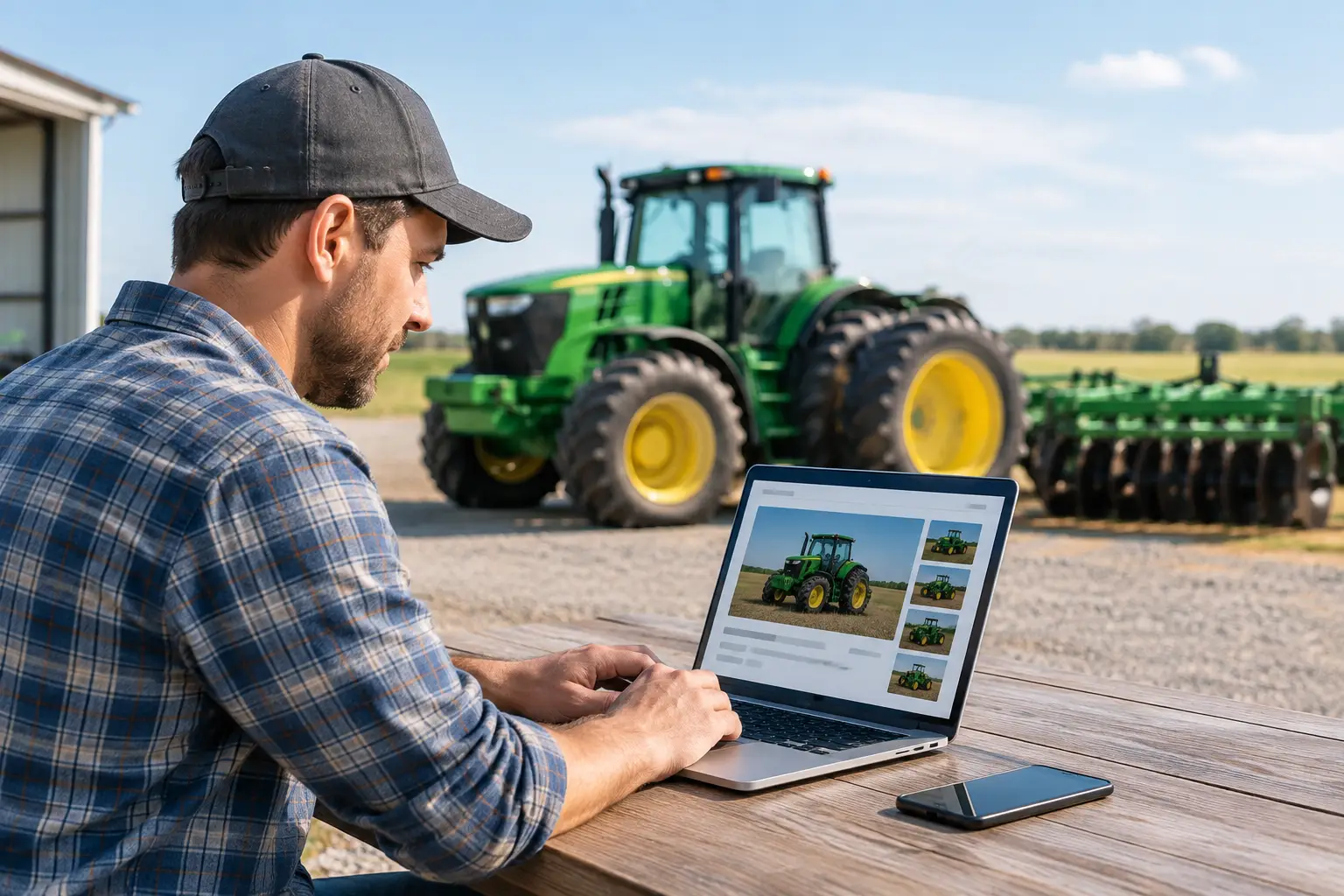
A buyer can forgive faded paint. They will not forgive driving three hours to find a loader with a weak hydraulic cylinder, a tractor that will not start cold, or a "field-ready" baler missing half its guards. If you want to know how to sell farm equipment online, start there: give a buyer the same straight answers you would give them standing beside the machine in your yard.
Selling online can put your equipment in front of buyers well beyond your usual coffee-shop network or local dealer lot. It also means your listing has to do more of the work. Good photos, an honest description, a sensible price, and clear terms separate serious calls from wasted time.
Get the machine ready before you list it
You do not need to restore every used implement before selling it. A clean, functional machine with known flaws is usually more believable than one with a fresh coat of paint hiding questions. Wash off mud, chaff, manure, and old grease where practical. Clear out the cab, remove personal tools, and make sure loose parts that go with the machine are gathered in one place.
Then run the equipment long enough to know what it does. Start it cold if it has an engine. Raise and lower the loader. Engage the PTO. Cycle the hydraulic remotes. Check lights, tires, belts, chains, bearings, and obvious leaks. This is not a dealership inspection, but it keeps you from making claims you cannot support.
Write down what needs attention before you post. A buyer may still want a disc with worn blades or a tractor with an air-conditioning issue, especially if the price reflects it. What they do not want is to uncover those things after they arrive.
Have the basics on hand: make, model, serial number, year if known, accurate hour meter reading, tire size, hitch type, working width, and any included attachments. If the hour meter quit at 4,812 hours five years ago, say so. Honest hour meters build more trust than a number that sounds too neat.
Price for the market, not the money you have in it
Used equipment prices depend heavily on region, season, condition, and how quickly you need it gone. A hay rake may draw more interest before first cutting than after the hay is in the barn. A four-wheel-drive tractor with good rubber has a broader market than a specialized machine needing parts. Freight distance matters, too. A bargain can stop being a bargain once hauling costs are added.
Look at recent asking prices for comparable equipment, but do not treat every asking price as a sale price. Compare age, hours, options, maintenance history, tire condition, and whether the machine is ready to work. Set a number you can explain to a serious buyer.
For fixed-price listings, decide ahead of time whether your price is firm, whether you will consider reasonable offers, and what your bottom line is. Put “firm” only if you mean it. If you are open to offers, say that without inviting lowball messages.
A timed auction can make sense for equipment with broad demand, a clear market value, or several likely buyers. It can also be useful when you need a defined sale date. The trade-off is that you give up some control over the final price unless you use a reserve where available. BarnBridge equipment auctions use a 4% seller fee and a 5% buyer premium, with both capped at $2,500, which makes the cost easier to calculate before you choose a sale method.
Take photos that answer questions
Real photos do more selling than polished wording. Take them in daylight, on reasonably level ground, with the machine clean enough to see. Photograph it as it sits, not only from the one angle that flatters it.
For most equipment, buyers need to see the following:
- Both sides, front, rear, and a full three-quarter view
- The hour meter, odometer, serial plate, and controls
- Tires, tracks, undercarriage, hitch, PTO, hydraulic couplers, and working parts
- The engine compartment, cab interior, seat, and roof where relevant
- Wear points, repairs, cracks, leaks, and damaged panels
Close-ups of flaws are not a weakness. They keep a buyer from assuming the worst. If a weld repair was done right and has held for ten years, show it and explain it. If there is a seep at a hydraulic fitting, photograph it. A buyer who knows what they are coming for is more likely to show up prepared to make a deal.
Short walk-around and operating videos can help with higher-dollar equipment. Show a cold start when possible, the engine at idle and under throttle, hydraulic functions, and any implement operating. Do not edit a video to imply the machine performs better than it does.
Write a description a working buyer can use
Your listing title should identify the equipment clearly. “2012 John Deere 5100E 4WD Loader Tractor” tells a buyer far more than “Nice Tractor.” Include the make, model, key configuration, and one meaningful feature.
In the description, lead with the facts: location, ownership, hours, condition, major features, included attachments, and reason for selling if it helps explain the situation. A seller moving to a larger hay operation, retiring, or no longer using a piece of equipment has a credible, ordinary reason to sell. You do not need a long story.
Use plain language. “Runs and operates as it should” is useful only if you have actually run it recently. “Sold as-is, where-is” is appropriate, but it does not give you a pass to leave out material defects. State what you know and avoid guessing.
For example, a strong description might say: “One-owner 15-foot rotary cutter. Stored inside when not in use. Gearboxes are quiet, PTO shaft and shields included, tailwheel holds air. Deck has surface rust and one older weld at the right rear corner. Used last week and cuts as it should. Buyer loads and hauls from outside Enid, Oklahoma.” That gives a buyer something solid to work with.
Set terms before the phone starts ringing
Most trouble in a private equipment sale comes from assumptions. Put the important terms in the listing before anyone contacts you. State whether the buyer is responsible for loading and hauling, whether you can assist with a loader, and whether the equipment can stay on your property after payment. If you have a deadline, say it.
Be clear about payment. For higher-value machinery, many sellers prefer verified wire transfer, cash handled safely, or a cashier’s check confirmed with the issuing bank before the equipment leaves. A screenshot of a payment notice is not proof that funds have cleared. Do not release the title, bill of sale, keys, or machine until you are satisfied payment is real.
If a machine has a title, lien release, or other ownership paperwork, have it ready. Requirements vary by state and equipment type, especially for trailers. A basic bill of sale should identify the buyer and seller, equipment description, serial number, sale price, date, and the fact that the item is sold as-is, where-is. Keep a signed copy for your records.
Handle buyers directly, but protect your time
A good buyer will ask specific questions: Does the three-point hitch work? What size hydraulic couplers? When were the knives changed? Can they inspect it on Saturday? Answer honestly and promptly, but do not spend your day measuring every bolt for someone who will never leave the couch.
Ask interested buyers when they plan to inspect, how they expect to haul it, and whether they have financing or funds arranged. This is not rude. It is practical. A buyer who cannot move a 14,000-pound tractor is not ready to buy a 14,000-pound tractor.
Watch for the usual warning signs. Be cautious with buyers who offer more than asking price, insist on sending a third party without a clear plan, pressure you to accept unusual payment methods, or refuse to discuss the equipment itself. Keep communication on the marketplace when possible, meet during daylight, and have another person nearby for an on-farm inspection.
Make pickup the last clean step
Before loading day, confirm the price, payment method, pickup time, equipment included, and who is bringing ramps, chains, permits, or hauling help. Take a final set of photos when the machine leaves, especially if it is loaded by the buyer or their transporter.
A direct sale works best when neither side is surprised. List the machine the way you would want to find it, price it with both the market and its condition in mind, and keep your terms plain. The right buyer does not need a sales pitch. They need enough honest information to hook up the trailer and come see it.
See what your machine is worth
Listings are free and livestock sells at 0% commission. Buyers contact you directly.