How to Inspect a Used Tractor Before Buying
Published October 27, 2026
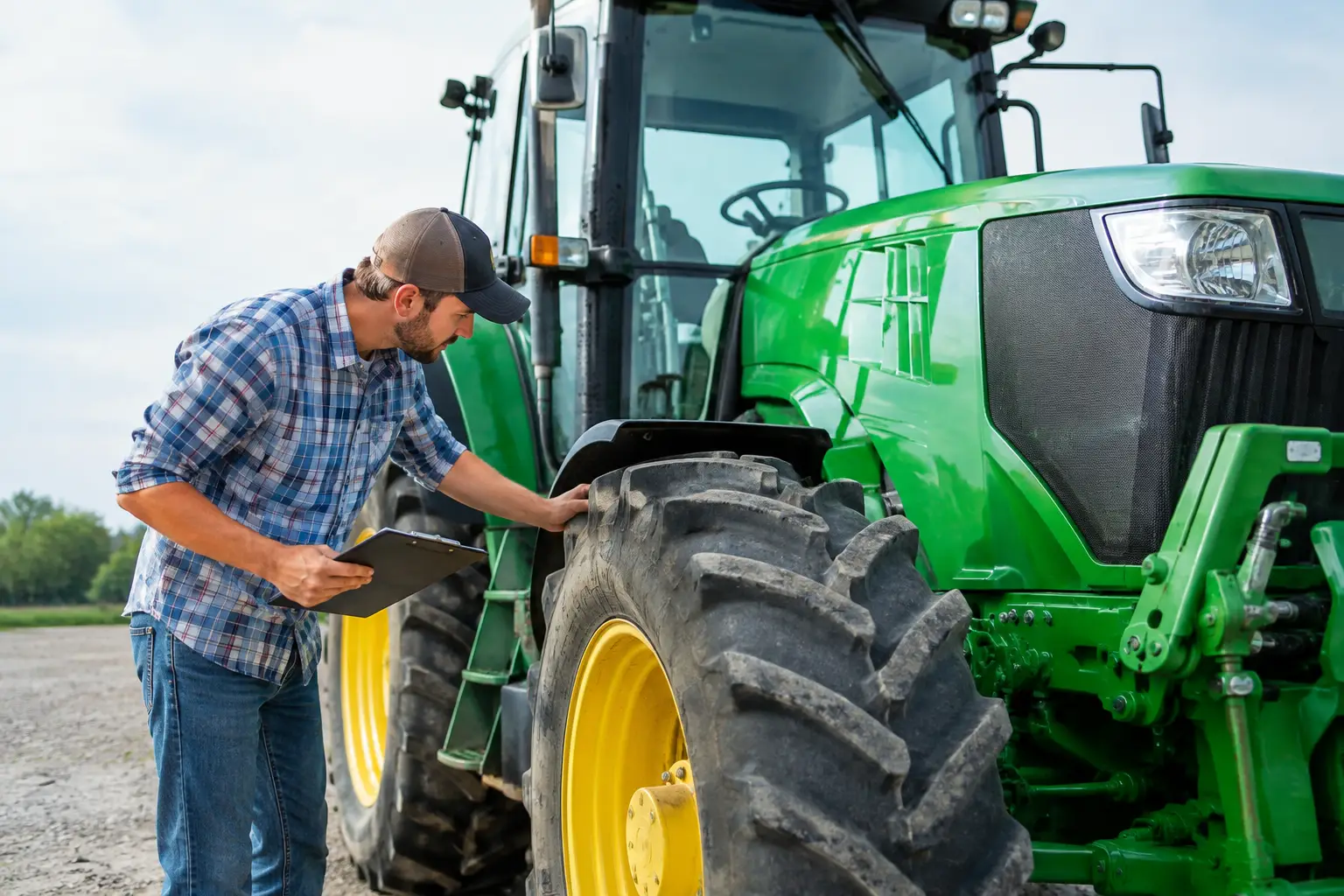
A clean paint job and a low-looking hour meter can make a used tractor look like a bargain. Neither one tells you whether the transmission slips under load, the hydraulic pump is weak, or the engine has been warmed up before you arrived. To inspect a used tractor before buying, plan to see it cold, work it hard, and ask the owner direct questions.
Used equipment is commonly sold as-is, where-is. That does not mean you should expect trouble. It means the inspection is where you protect your money. A straightforward owner with real photos, service records, and time to demonstrate the machine is usually worth more than a rushed deal with a suspiciously low price.
Start Before You Make the Drive
Ask for the tractor's make, model, serial number, stated engine hours, and a clear reason for selling. Request photos of the hour meter, tires, loader pins, three-point hitch, PTO area, underside, and any known leaks or damage. If it has an electronic dash, ask whether any warning lights are on.
The serial number matters. It helps confirm the production year, find the correct parts diagrams, and check whether the tractor has the transmission and hydraulic options the seller claims. A compact tractor with a hydrostatic transmission is a different machine from the same model with gear drive. So is a utility tractor with four-wheel drive, dual remotes, or a cab.
Ask the owner not to start it before you arrive. A cold start is one of the most useful parts of an honest inspection. If the tractor is already warm, that is not proof of a problem, but it removes a piece of information you needed.
Bring a flashlight, clean rag, work gloves, a small notebook, and clothes you do not mind getting dirty. If you are serious about a larger purchase, bring someone who has operated that type of tractor or arrange for a farm equipment mechanic to inspect it. Paying for an experienced set of eyes can be cheaper than replacing a powershift transmission.
Inspect the Tractor Before It Starts
Walk around the machine slowly. Look for fresh paint over welds, mismatched panels, bent loader arms, cracked castings, and places where oil and dirt have built up together. Old equipment can sweat a little. A fresh drip forming under the engine, axle, hydraulic pump, or final drive needs an explanation.
Check the engine oil before starting. Milky oil can point to coolant contamination. Oil that smells strongly of fuel may indicate injector, pump, or ring problems. Pull the transmission and hydraulic dipsticks if accessible. The fluid should not look milky, foamy, or full of metallic glitter.
Look at the coolant only when the engine is cold. Rusty coolant, oily film, or a low radiator level can signal neglected maintenance or a more serious engine issue. Inspect hoses and belts for cracking, and look around the water pump and radiator for dried coolant residue.
Tires deserve more attention than many buyers give them. Check tread depth, sidewall cracks, weather checking, cuts, fluid leaks around valve stems, and mismatched tire sizes. Rear tractor tires are expensive, especially on four-wheel-drive machines where correct tire sizing and rolling circumference matter. One worn-out set can change a fair asking price fast.
Check Wear Against the Hour Meter
Hour meters can fail, be replaced, or simply not tell the full story. Compare the stated hours to the condition of the pedals, steering wheel, seat, hitch balls, loader controls, brake pedals, and drawbar. A tractor showing 1,200 hours with polished pedals, loose controls, and badly worn hitch points deserves more questions.
Wear alone does not make a tractor bad. A carefully maintained 6,000-hour utility tractor may be a better buy than a neglected 1,500-hour machine. What matters is whether the tractor's overall condition matches its story.
Make the Cold Start Count
Watch the seller start the tractor. It should crank at a reasonable speed and start without excessive help. On a diesel, a little smoke at startup can be normal, especially in cool weather. Heavy white smoke that continues after warmup, blue smoke, hard starting, or a steady miss should not be brushed off.
Listen for knocking, rattling, squealing belts, exhaust leaks, or unusual gear noise. Let the tractor idle long enough to build oil pressure and begin warming up. Check the dash for warning lights, low oil pressure, charging issues, or overheating.
Once it is running, look again underneath and around the engine. Heat and pressure can reveal leaks that were not visible during the walk-around. Check the exhaust color under a quick increase in throttle, but do not judge an engine from one puff of smoke alone. A tractor working hard in dusty conditions will not look or sound like a new machine.
Test the Transmission, Brakes, and Four-Wheel Drive
Drive the tractor through every forward and reverse range. Do not settle for a trip across the yard in one gear. A gear-drive tractor should shift as designed without grinding, popping out of gear, or excessive clutch chatter. A hydrostatic tractor should move smoothly in both directions and hold power when climbing or pushing into a load.
Test both brakes separately if the tractor has split brake pedals, then test them together. The tractor should stop straight. Weak brakes, seized pedals, or a pull to one side can create a safety issue, not just a repair bill.
Engage four-wheel drive if equipped. On a suitable surface, make a gentle turn and confirm the front axle is pulling. Listen for clicking, binding beyond what is normal on hard ground, or axle noise. Check the front axle pivot, steering cylinder, tie rods, and front hubs for play or leaks. Loader tractors put a lot of stress on these areas.
If the tractor has a differential lock, test it too. It should engage and release properly. Do not force it while the wheels are spinning.
Put the Hydraulics and PTO to Work
A tractor can idle smoothly and still have weak hydraulics. Run the loader from bottom to top, curl and dump the bucket, and hold it at full lift for a few minutes. Watch for jerky movement, slow response, drift, or hydraulic whine. Look closely at cylinder rods for pitting and at hose fittings for fresh oil.
Then put weight in the bucket if possible. A loader that lifts an empty bucket tells you very little. If the seller has a pallet, round bale spear, dirt pile, or another safe load available, use it. Watch for loader-frame cracks, loose pins, egg-shaped pin holes, and boom arms that are not level with each other.
Test the three-point hitch through its full range. It should raise, lower, and hold an implement without bleeding down quickly. Check the lift arms, stabilizers, top link bracket, and sway controls for weld repairs or excessive looseness.
Engage the PTO with an implement if one is available. Listen for chatter or grinding, and confirm it stays engaged under load. Verify the PTO speed options, such as 540 or 1,000 RPM, match what you need. PTO repairs can be involved, so a seller who will not demonstrate it is asking you to take a gamble.
Check the Paperwork and the Whole Deal
Confirm the seller's name matches the ownership paperwork or that they can clearly explain their authority to sell it. Ask for maintenance records, repair invoices, manuals, spare keys, and any attachments included in the price. For financed equipment, make sure any lien is satisfied before money changes hands.
Write down the serial number and compare it to the machine. If the serial plate is missing, altered, or hard to explain, walk away until the situation is cleared up. A good tractor with bad paperwork can become an expensive problem.
Before agreeing on price, account for what the tractor will need right away. Tires, fluids, filters, battery, pins and bushings, a seat, or a small hydraulic hose may be manageable. Engine work, transmission trouble, weak hydraulics, and four-wheel-drive repairs are different categories of expense.
When you buy directly from an owner, you get the chance to ask the person who ran the machine how it was used. That is one of the advantages of a marketplace such as BarnBridge. Use it. Ask what implements it pulled, how often it was serviced, where it was stored, and what they would repair if they planned to keep it.
Do not let a long drive, a clean tractor, or another interested buyer rush your decision. The right used tractor does not need to be perfect. It needs to start honestly, work as promised, carry clear ownership, and leave enough room in your budget for the work ahead.
See what your machine is worth
Listings are free and livestock sells at 0% commission. Buyers contact you directly.