Private Treaty Cattle Sales for Better Deals
Published October 11, 2026
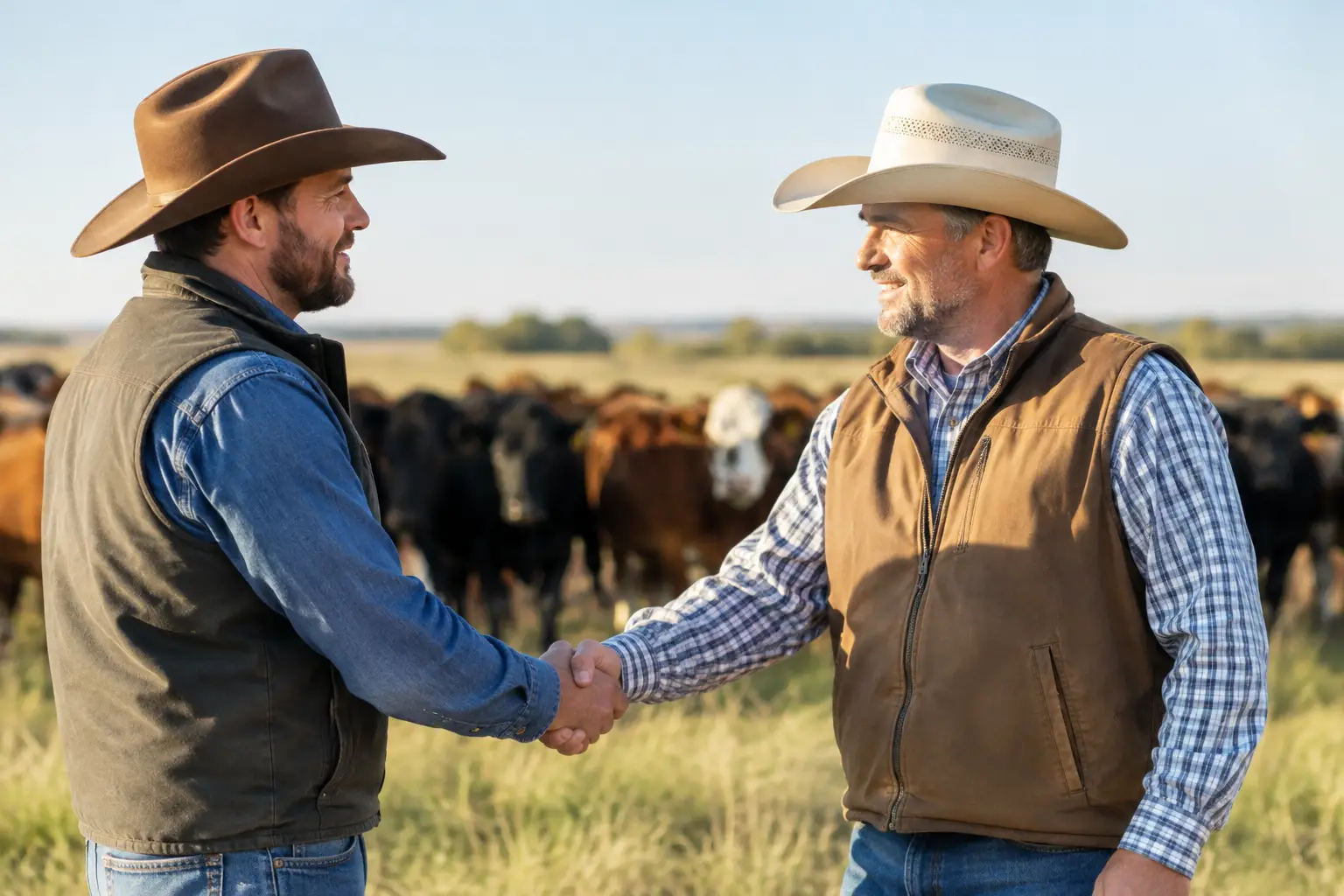
A good set of bred heifers can bring plenty of phone calls. The right buyer may be 30 miles away or three states over, but the deal still comes down to the same basics: cattle that match the description, a fair number, and two people who can get the details settled. That is the working advantage of private treaty cattle sales.
Unlike a sale barn consignment or a video auction, a private treaty sale puts the owner and buyer in direct contact. The seller sets the terms. The buyer can ask questions, inspect the cattle, and decide whether the offering fits the operation. There is no ringman pushing the pace and no commission quietly taking a bite out of every head.
That freedom can make for a better deal. It also means both sides need to do their homework.
How Private Treaty Cattle Sales Work
A private treaty sale is a direct, negotiated transaction between a cattle owner and a buyer. The cattle may be offered at a fixed price per head, per pound, by the pair, or as an entire group. Some sellers will entertain an offer. Others price the cattle firm and sell them to the first qualified buyer who meets the terms.
The cattle are usually marketed through word of mouth, ranch signs, local networks, social media, classified listings, or an owner-to-owner marketplace. The buyer contacts the seller directly, asks for more information, arranges a visit or requests current video, and works out payment, pickup, and paperwork.
That does not mean every deal has to be face-to-face. Buyers commonly purchase cattle based on detailed photos, video, health records, weights, and a seller's reputation, especially when distance makes a visit impractical. But the farther cattle are from the buyer, the more complete the information needs to be. A few pen photos and the words “nice cattle” are not enough for a buyer arranging a truck across several state lines.
Why Sellers Use Private Treaty Cattle Sales
The biggest benefit is control. A seller can choose when cattle are ready, set a reserve in plain sight, and avoid selling into a soft sale day simply because the trailer is loaded. This matters with replacement females, seedstock, bred cows, pairs, and uniform groups of feeders that deserve to be marketed on more than a single glance as they pass through the ring.
Private treaty can also reduce selling costs. Sale barns provide a valuable service, especially for quick marketing and price discovery, but they charge commission and may involve hauling, shrink, yardage, and timing risk. A direct livestock listing on BarnBridge can give a seller national reach while keeping livestock commissions at 0%.
There is a trade-off. A sale barn can turn cattle into a completed transaction in one day. A private treaty listing may require answering calls, sorting out tire-kickers, taking better pictures, and waiting for the right buyer. If cash flow is tight or the cattle need to move this week, speed may matter more than squeezing out the last dollar per head.
Price Cattle From the Facts, Not the Wish List
Private treaty pricing starts with the local market, but it should not end there. Comparable cattle set the range. The individual offering determines where it belongs within that range.
For feeder cattle, buyers will look at weight, sex, frame, flesh, health program, uniformity, breed influence, weaning status, and lot size. A single load of even, vaccinated, bunk-broke steers is not priced like a mixed pen of calves with unknown health history. For cows and bred females, age, teeth, body condition, pregnancy status, calving window, disposition, udder quality, and breed registration can all change the value.
Be specific about how the price is stated. “$2,100 per head” and “$2.10 per pound on the ranch scale” are different offers. If cattle will be weighed, say whether the weight is pay weight, whether there is a pencil shrink, what scale will be used, and who pays for the weigh-up. A clear price structure prevents most end-of-loadout arguments.
Sellers should leave room to negotiate only if they intend to. A firm price is fine. So is a price that changes for someone buying the whole group, taking prompt delivery, or supplying their own hauling. What causes trouble is listing a number and then adding conditions after a buyer commits time and fuel to inspect cattle.
Build a Listing a Buyer Can Actually Evaluate
Good cattle do not need fancy marketing. They need honest information. Start with the basics: head count, breed or breed makeup, sex, approximate or actual weight, age, location, and price. Then add the details a serious buyer will ask for anyway.
For females, include breeding exposure dates, bull information if applicable, pregnancy-check date and method, expected calving period, vaccination history, and any known issues. For feeder cattle, state weaning date, vaccinations and boosters, whether they are preconditioned, feed and water source, and whether they have been started on a bunk.
Real photos matter. Take them in daylight with cattle standing on reasonably level ground. Show both sides of representative animals, not just the best two in the group. A short video of the cattle walking through the pen tells a buyer more about condition, movement, and disposition than a dozen distant photos. If a cow is short-bred, open, lame, bad-uddered, or has a known blemish, disclose it. A surprise at loadout can ruin a deal and a reputation fast.
A useful listing also says what is included and what is not. Are ear tags staying? Are registration papers available? Is delivery possible? Are cattle available for inspection by appointment? Put the practical answers up front.
Buyers Should Inspect the Cattle and the Terms
Private treaty does not mean buyers should skip due diligence because the seller seems straightforward. Inspect the cattle when possible, and ask for current photos or video when a visit is not practical. Confirm the count, weights, health history, and the condition described in the listing.
For bred females, ask who performed the pregnancy check and when. A pregnancy status is only as current as the date it was checked. For registered stock, verify the animal identification matches the paperwork. For any group, ask whether cattle have been treated recently, whether there are known health concerns, and whether the herd has testing or vaccination records relevant to your program.
Buyers also need to account for the full delivered cost. A fair price on cattle can turn expensive after trucking, insurance, fuel, overnight stops, death loss risk, and receiving costs. Long-haul cattle may need a quiet receiving pen, good hay, clean water, and time to settle before they are worked or mixed with the home herd.
If the buyer cannot inspect in person, use direct conversation to close the gaps. Ask the seller to walk the group on video, show tags, show cattle at the bunk, and provide the information in writing. A serious seller should not be offended by reasonable questions.
Put the Deal in Writing Before the Truck Arrives
A handshake still carries weight in cattle country. A written confirmation protects that handshake. It does not need to be complicated, but it should state exactly what both sides agreed to.
Confirm the number of head, cattle description, price basis, deposit if any, payment method, pickup date, loading location, hauling responsibility, and required documents. If the cattle are sold as-is, say so clearly. If the deal depends on a veterinary certificate, brand inspection, pregnancy verification, or an interstate certificate of veterinary inspection, make that a stated condition of the sale.
Rules differ by state and can change based on the class of cattle, destination, and ownership transfer. Brand inspection requirements, movement paperwork, and health certificates are not details to sort out after the trailer backs in. Buyers and sellers should check the requirements that apply to the origin and destination before money changes hands.
Deposits deserve plain terms too. State whether a deposit is refundable, what deadline applies, and what happens if the buyer misses pickup. The same goes for payment. Many sellers release cattle only after verified payment. That is not distrustful. It is sound business.
Keep the Transaction Direct and Professional
The best private treaty deals are usually the least dramatic. The seller answers questions straight. The buyer shows up when promised, or communicates early if plans change. The truck is appropriate for the cattle, gates and pens are ready, and payment is handled before the cattle leave.
Watch for red flags on either side. A buyer who refuses to discuss payment but wants someone else to haul immediately is a problem. A seller who will not provide a location, current photos, or basic health information deserves caution. Do not send deposits to an unverified party, and do not release cattle based on a screenshot claiming payment was sent.
Private treaty sales reward the kind of business rural people have always valued: know what you have, describe it honestly, and stand behind the terms you gave. Do that consistently, and the next buyer may come from a long way off but will still feel like a neighbor when the truck pulls in.
Got stock to sell?
Listings are free and livestock sells at 0% commission. Buyers contact you directly.