How to Sell Hay Locally Online Without Wasting Time
Published October 12, 2026
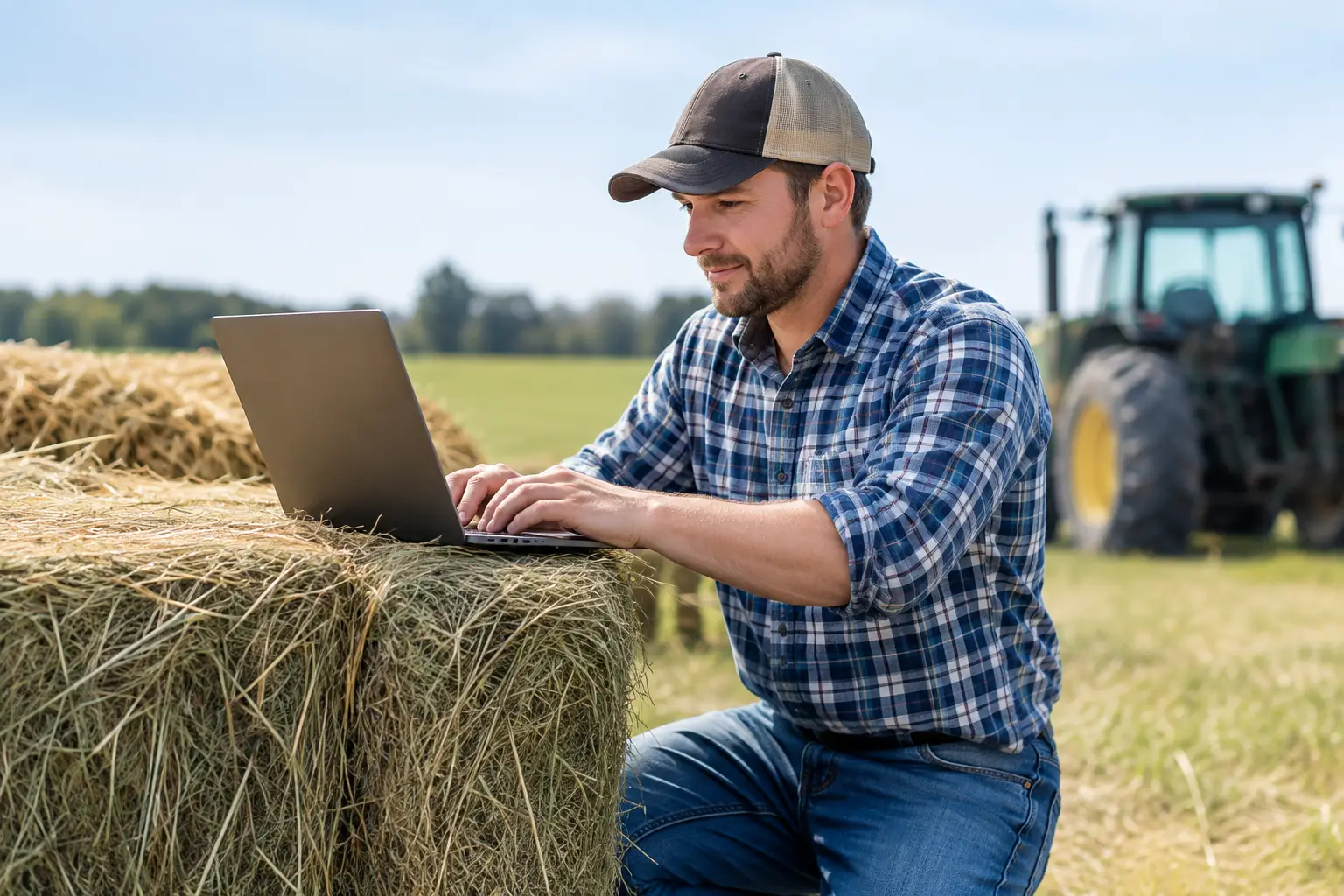
A buyer who needs hay this week is not looking for a clever ad. They need to know what kind of hay it is, how it was baled, where it sits, what it costs, and whether they can get it loaded. To sell hay locally online, put those answers in the listing before the first message comes through. That is how you separate real buyers from folks who are only price-checking.
Hay is local by nature. Freight can turn a good deal into an expensive one fast, especially for small square bales. But an online listing gives a producer reach beyond the usual fence-line network, feed store bulletin board, and regular customer list. Done right, it helps you move hay steadily while keeping the transaction direct, plain, and on your terms.
Sell Hay Locally Online With the Facts Buyers Need
The biggest mistake in hay listings is being too vague. “Good horse hay” may be true, but it does not tell a buyer enough to make a hauling plan. Horse owners, cattle producers, goat keepers, and small homesteads are often buying for different needs. A dairy-quality alfalfa listing and a listing for clean grass hay for dry cows should not read the same way.
Start with the forage itself. State the primary hay type, such as bermudagrass, orchardgrass, fescue, timothy, alfalfa, brome, mixed grass, or an alfalfa-grass mix. If you know the cutting, include it. First cutting can be perfectly usable hay, but buyers may expect a different leaf-to-stem ratio than later cuttings. If the hay was tested, say so and provide the results you have. Do not claim feed value you cannot support.
Then give the bale facts. Buyers need the bale type, dimensions, approximate weight, and how many are available. “4x5 net-wrapped round bales, approximately 850 to 950 pounds, 42 available” is useful. “Round bales for sale” makes people ask three more questions before they can decide whether to call.
Condition deserves the same straight talk. Mention whether hay was stored inside, under a shed, tarped, or outside. Say if bales are tight, weathered on the outer layer, or have any known spoilage. A little sun fade on outside-stored round bales is not the same thing as mold, and a buyer should not have to guess which one they are getting.
Use Real Photos, Not Just a Pretty Field Shot
A field photo can show that you put up hay, but it does not prove what a buyer will load. Take current photos of the actual stack or row being sold. Show several bales from different angles, the ends of square bales, net wrap on round bales, and the storage area. If there is weathering, show it. Honest photos save time because serious buyers can judge whether the hay fits their operation before they make the drive.
A short video can help when selling a larger lot. Walk around the stack, show the access road, and give a clear look at bale condition. Keep it simple. There is no need to oversell clean, well-kept hay when the photos already show it.
If you have multiple lots with different quality, keep them separate. Do not photograph your best alfalfa and then offer a mixed stack of grass hay at the same price. Label lots clearly by cutting, storage method, and price. That protects your reputation with repeat customers.
Price Hay in a Way That Makes Sense Locally
There is no single right hay price. Local supply, weather, forage type, bale size, storage, feed quality, and the time of year all matter. A drought year can change the market quickly. So can a wet spring that leaves buyers short on their own production.
Before posting, look at comparable hay within a realistic hauling distance. Compare similar bale sizes and forage types, not just the lowest number you see. A $55 round bale may sound cheaper than a $70 bale until the buyer learns one is a light 4x4 bale and the other is a dense 5x5 bale. Price per bale is familiar, but approximate weight gives buyers the context to compare fairly.
Be clear about whether the price is per bale, per ton, per bundle, or for the whole lot. State whether the price changes for a larger quantity. If you will sell by the bale, say so. If you want buyers to take a minimum of 10 round bales or an entire stack, put that up front. A buyer who needs two bales for weekend feed will not waste your time, and you will not waste theirs.
It is also fair to adjust price as the season changes. Just explain the current terms rather than arguing about last year’s price. Hay that has been stored dry, kept off the ground, and handled carefully carries value. Good buyers understand that when the details are visible.
Make Pickup and Loading Terms Clear
Most hay deals are settled by logistics. A buyer may like the product and price but still need to know whether a pickup can get in, whether you can load, and what kind of trailer fits the site.
State your general location, such as county and nearest town, without posting more personal detail than you are comfortable sharing publicly. Let serious buyers contact you for the exact address and pickup instructions. Include whether the access works for a pickup and gooseneck, a semi, or only smaller trailers. If a narrow gate, soft lane, low limb, or muddy turn-around can cause trouble, mention it before a truck arrives.
Also say who loads. If you have a tractor, spear, or loader and are willing to load during certain hours, spell that out. If the buyer must bring labor or equipment, say that plainly. For small squares, clarify whether bales are stacked in a barn, on a wagon, or in a field and whether help is available.
Set expectations around scheduling and payment. Many sellers prefer cash, verified electronic payment, or payment before loading. There is no need to apologize for that. Hay is a tangible farm product, and a direct sale works best when both sides know the terms before the first bale moves. If you hold hay with a deposit, explain how long you will hold it and whether that deposit is refundable.
Write a Listing That Filters Out Bad Leads
A strong listing is not long for the sake of being long. It is specific enough that the right buyer can make a decision. Put the most important facts near the top: hay type, bale type, price, quantity, location, and loading availability.
For example, a straightforward opening might read: “Orchardgrass small squares for sale near Springfield. Second cutting, stored in a dry barn, approximately 55-pound bales. $8 per bale, 600 available. Minimum 25 bales. Loading available by appointment.” That tells a horse owner almost everything needed to start a useful conversation.
After that, add condition details and any limitations. If hay is not tested, say it is not tested. If it is suitable for cattle but you would not market it as premium horse hay, be direct. The goal is not to talk a buyer into hay that does not fit their animals. The goal is to make a clean sale that does not come back as a dispute.
On a farmer-first marketplace such as BarnBridge, direct owner communication gives you room to answer practical questions without dealer markup or a middleman speaking for the product. Respond to serious messages promptly, but do not feel pressured to negotiate against yourself. A buyer who asks sensible questions about storage, weight, and pickup is usually a better prospect than one who only sends “lowest?”
Keep the Sale Safe and Keep a Record
Treat an online hay sale like any other farm-gate transaction. Confirm the buyer’s name, quantity, price, pickup time, and payment method in writing before they arrive. If they are sending a hauler, make sure the hauler knows exactly what is being picked up and who is authorized to make changes to the order.
Avoid unusual payment arrangements, overpayment stories, and requests to release hay before funds are verified. Those are not part of normal rural commerce. For a larger order, a simple receipt showing date, hay description, quantity, price, buyer name, and “sold as-is, where-is” can prevent confusion later. Keep a copy for your own records.
Once the buyer arrives, let them inspect the hay they are purchasing. If they want to open a bale or check a few bales from the stack, that is usually better handled before loading than after the truck leaves. Buyers should inspect, sellers should disclose, and both sides should agree on the load before it heads down the road.
A good hay customer is worth more than a one-time quick sale. Give them the same straight answer you would give a neighbor standing by the barn: here is what it is, here is what it costs, and here is how we can get it loaded.
Got stock to sell?
Listings are free and livestock sells at 0% commission. Buyers contact you directly.