Skid Steer Versus Compact Tractor: Which One Fits?
Published October 25, 2026
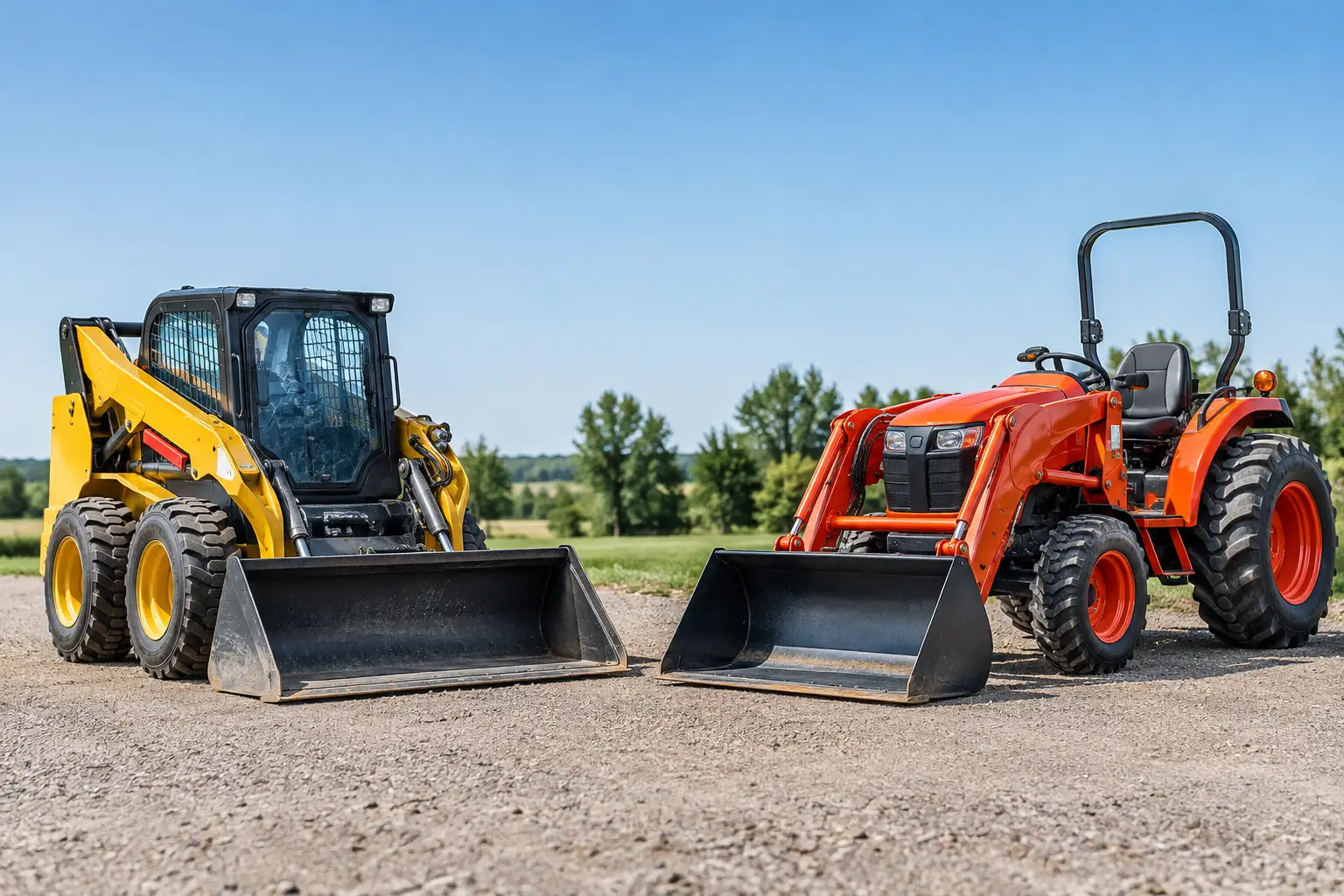
A machine can look like a bargain right up until it spends half the year parked because it does not match the work. The skid steer versus compact tractor decision usually comes down to more than horsepower or purchase price. It comes down to the jobs waiting after breakfast: feeding cattle, moving round bales, repairing a driveway, mowing pasture edges, cleaning pens, digging water lines, and getting back to the house before dark.
Both machines can earn their keep. Both can take attachments. Both show up often on small farms, ranches, homesteads, and acreage properties. But they work differently, wear differently, and make sense for different kinds of ground and chores.
Skid Steer Versus Compact Tractor: Start With the Work
A skid steer is built to push, lift, carry, and work in tight places. With a bucket, pallet forks, grapple, auger, or brush cutter, it can make fast work of material handling and land cleanup. It turns inside its own footprint, which matters in a crowded barn lot, around feed bunks, or beside a stack of hay.
A compact tractor is built for broader farm utility. Its three-point hitch and rear PTO make it a natural fit for mowing, tilling, spreading, post-hole digging, grading, and other implement work. Add a front-end loader and it can handle plenty of lifting and loading, though generally not with the same speed or visibility as a skid steer.
The cleanest way to choose is to look at where the hours will go. If most of your time is spent moving dirt, manure, gravel, brush, feed, pallets, or bales around a working yard, a skid steer may pay for itself in saved labor. If your work includes regular mowing, brush hogging, seeding, tillage, finish grading, or PTO-driven implements, a compact tractor is usually the better all-around hand.
Where a skid steer earns its keep
A skid steer shines when the loader is the main event. The operator sits close to the work, with a good view of the bucket edge, forks, or grapple. That makes it easier to load trailers, clean lots, place rocks, strip old fence rows, and work close to buildings.
Its quick-attach system is another advantage. Switching from bucket to forks to grapple can take just a few minutes. For an owner who handles different materials all day, that speed adds up. A skid steer also has the hydraulic flow to run attachments such as trenchers, tree shears, stump grinders, and certain brush cutters that a compact tractor may not run as effectively.
The trade-off is that a skid steer is not a gentle machine on turf. Standard tires can tear up soft ground when turning, and tracked machines can leave their own mark, especially in wet conditions. It also rides rougher over distance. If you need to travel a mile down a lane to mow a pasture, the skid steer starts to feel like the wrong tool.
Where a compact tractor earns its keep
A compact tractor covers a lot of ordinary farm work without much fuss. It is better suited to pulling implements over acreage, maintaining lanes, mowing fields, drilling fence holes, moving small square bales, and handling seasonal chores. With a rotary cutter on the back and a loader bucket up front, one pass can take care of a surprising amount of property maintenance.
For livestock owners, a compact tractor can be especially useful when chores are spread out. It travels comfortably from the equipment shed to the back pasture, burns less fuel on lighter work, and can run equipment through the PTO rather than requiring every attachment to have its own hydraulic motor.
Its limits show up in hard loader work. A compact tractor can load manure, handle feed, and move materials, but the loader is usually slower and less durable under repeated heavy cycles than a skid steer. The operator also has less visibility into a full bucket, and maneuvering with a long implement behind the tractor takes room.
Lifting Capacity Is Not the Whole Story
Buyers often start with rated operating capacity or loader lift figures. Those numbers matter, but they do not tell the full story.
A skid steer may have higher lift capacity in a compact package and can often place a load with more precision. That is useful for loading bulk bags, stacking pallets, handling large rounds, or setting materials on a trailer. But the machine must be properly ballasted, the attachment must be rated for the work, and the load needs to stay low while traveling. A bale spear and a heavy wet round bale can make a small machine feel light in the rear in a hurry.
A compact tractor's front-end loader may lift less, but rear ballast and proper counterweight make a major difference. If moving bales is only an occasional job, a tractor with the right loader rating, tire setup, and ballast may be enough. If it is a daily chore, do not buy based on what the machine can barely lift once. Buy for the weight you will handle on an ordinary day, with a margin for uneven ground and real-world conditions.
Attachments Can Change the Answer
The machine itself is only part of the purchase. Attachments determine what it can actually do on your place.
Compact tractors have an edge in the wide world of three-point implements. Rotary cutters, finish mowers, box blades, landscape rakes, tillers, seeders, spreaders, rear blades, and PTO-driven equipment are common, available used, and often less expensive than hydraulic skid steer attachments. For acreage maintenance, that matters.
Skid steers have the advantage for high-production attachment work. A grapple is hard to beat for brush and storm cleanup. Forks make feed, fencing supplies, and palletized material easier to manage. An auger, trencher, or brush cutter can turn a weekend job into an afternoon job when the machine has enough auxiliary hydraulic flow.
Before buying either machine, price the attachments you actually need. A cheap skid steer without forks, bucket, grapple, and a mower may not be cheap after all. The same goes for a compact tractor that needs a loader, rotary cutter, ballast box, rear blade, and mower before it is ready to work.
Terrain, Weather, and Yard Conditions Matter
On firm, level ground, either machine can work well. The decision gets clearer when the ground is wet, steep, rocky, wooded, or crowded.
A compact tractor generally treats finished ground and pasture better, particularly with turf or R4 industrial tires. It can also be more stable on moderate slopes when operated correctly, though any loader work on a hillside deserves caution. Keep loads low, use appropriate ballast, and do not confuse four-wheel drive with invincibility.
A skid steer is at home in tight, rough work areas, but its short wheelbase and quick steering can make it uncomfortable on uneven ground. Wheeled models are fast and often cost less to maintain, while tracked models offer better flotation and traction in loose dirt or mud. Tracks also cost real money when it is time to replace them, and undercarriage wear should never be ignored on a used machine.
If your barn lot stays muddy through spring, think beyond the brochure. Ask where the machine will park, whether it can reach the work without rutting fields, and how often it will need to cross soft ground with a loaded bucket.
Buying Used: Inspect the Parts That Cost Money
Used equipment can be a sensible buy, but the best deal is the machine with an honest history, not the lowest number on the screen. Real photos, service records, and an owner willing to answer plain questions are worth something.
For either machine, check the hour meter against pedal wear, seat condition, pins, controls, and the general level of use. A low-hour claim should look like a low-hour machine. Run it long enough to get it warm, work the hydraulics, and look for leaks that only show up under pressure.
On a skid steer, pay close attention to loader-arm pins and bushings, tire or track condition, hydraulic hoses, auxiliary couplers, chain case or drive operation, and warning lights. On a compact tractor, inspect the loader frame, front axle, three-point hitch, PTO engagement, transmission response, hydraulic functions, and signs of engine blow-by or neglected cooling-system service.
Do not skip the attachments. Bent forks, cracked grapple tines, loose quick-attach plates, worn mower gearboxes, and damaged PTO shafts can turn a good purchase into a repair bill. Sold as-is, where-is is normal in farm equipment, which is why an in-person inspection is part of the deal.
Cost Includes More Than the Purchase Price
Compact tractors often cost less to own when the work is light to moderate and spread across many different implement jobs. Their fuel use can be lower, and common three-point equipment is widely available in the used market.
Skid steers can justify higher operating costs when they replace repeated manual labor or rented equipment. If you are constantly loading, cleaning, lifting, digging, or handling materials, the speed difference is not small. It can mean finishing a job before weather turns or getting a second task done the same day.
Hauling is another practical cost. A compact tractor with loader and implements may require a substantial trailer, but a skid steer and several attachments can get heavy fast. Make sure your truck, trailer, ramps, tie-downs, and licensing situation match the actual transport weight. Guessing is not a hauling plan.
The better buy is the machine that sees regular use without forcing you to own a second machine for every common chore. For many acreage owners, that is a compact tractor. For operations centered on material handling and cleanup, it is often a skid steer.
Before you buy, make a plain list of the jobs you did last year and the jobs you expect next year. Put real hours beside each one. Then inspect machines in person, ask direct questions, and buy the one that fits the work you have - not just the work that looks good in a listing. A direct owner-to-owner marketplace such as BarnBridge gives buyers room to compare real equipment, talk to the seller, and make that call with their eyes open.
See what your machine is worth
Listings are free and livestock sells at 0% commission. Buyers contact you directly.