How to Verify Farm Equipment Ownership Before Buying
Published October 21, 2026
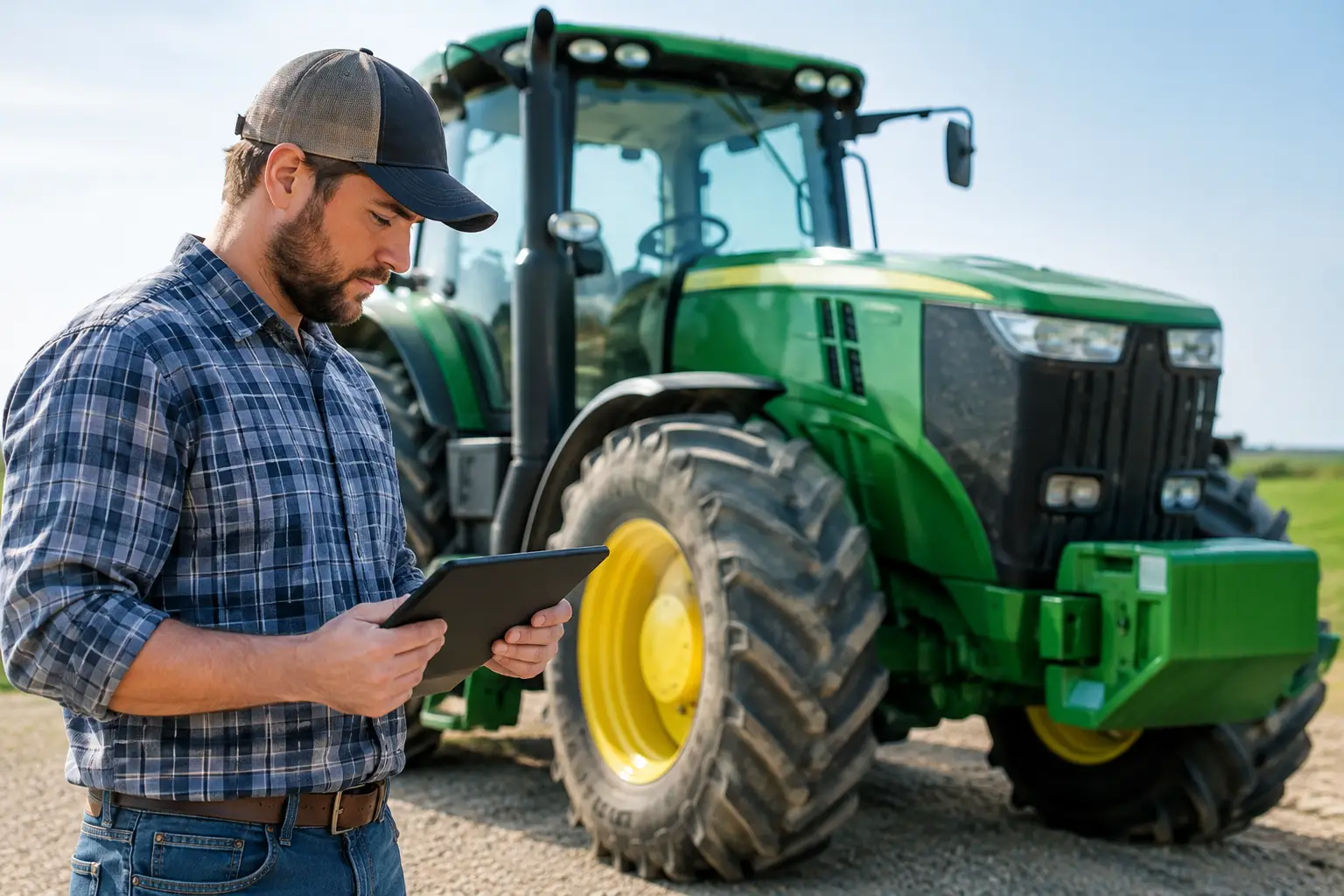
A clean-looking tractor, a fair price, and a seller who says, “I’ve had it for years,” are not proof that the machine is theirs to sell. Before money changes hands, take the time to verify farm equipment ownership. That means matching the machine to the seller, checking for a lender’s claim, and making sure the paperwork tells the same story as the iron sitting in the yard.
Most farm equipment does not come with a title like a pickup does. That is normal. But “no title required” does not mean “no proof needed.” A good seller should be able to answer direct questions, show identifying numbers, and provide a bill of sale that protects both sides.
Start With the Machine’s Identification Numbers
The first job is finding and recording the equipment’s identifying number. Depending on the machine, that may be a VIN, PIN, serial number, or product identification number. Tractors, skid steers, combines, balers, excavators, and self-propelled sprayers usually have a metal tag or stamped number. Implements may carry a model and serial plate, though older equipment sometimes has neither.
Ask for a clear photo of the tag before you drive across the county or arrange hauling. When you inspect the machine, compare that photo with the number on the equipment itself. The plate should not look freshly replaced, painted over, scraped up, or riveted on in a questionable way.
Common locations include the frame rail, engine compartment, cab frame, transmission housing, drawbar area, or right side of the main frame. If you cannot find the number, check the operator’s manual for its location or call a dealer for that make. A missing tag is not always proof of trouble on an old implement, but it lowers the value and raises the risk.
The number should also match every document the seller provides. One wrong digit can be a simple mistake. It can also mean the paperwork belongs to another machine.
Ask the Seller Questions That Have Real Answers
A legitimate owner usually knows the basics without having to build a story around them. Ask when they bought the machine, where it came from, how it has been used, and why they are selling it. Ask whether they bought it from a dealer, an auction, a neighbor, or an estate.
You are listening for details that line up. A seller who says they have owned a tractor for ten years should have a reasonable explanation for the service records, financing paperwork, or prior bill of sale. A seller handling an estate should be able to explain their authority to sell it and provide the estate or probate paperwork if the situation calls for it.
Do not confuse a seller’s location with ownership. Equipment parked at a rented farm, a custom operator’s shop, or a relative’s place may belong to someone else. If the seller is acting for a business, ask for the business name and confirm that the person signing the bill of sale is authorized to do so.
Check for Loans and Liens Before You Pay
A machine can be honestly offered for sale and still have a lender’s claim against it. If the equipment was financed, the bank, credit union, manufacturer finance company, or another creditor may hold a security interest. Paying the seller does not automatically erase that obligation.
To verify farm equipment ownership properly, ask plainly whether the equipment has a loan, lease, or lien. If the answer is yes, do not rely on a promise that the seller will pay it off after you leave. Contact the lender using a phone number you find independently, not one handed to you in a text message. Confirm the payoff process and ask what the lender needs before it will release its claim.
In many states, a Uniform Commercial Code, or UCC, filing may show whether a business or individual has granted a security interest in equipment. State-level UCC searches can be useful, especially on higher-dollar tractors, combines, construction equipment, and trailers. Search rules vary by state, and a clean search is not an absolute guarantee. Names can be misspelled, filings can be indexed differently, and some equipment may be covered under broader agreements.
Still, a lien check is cheap insurance compared with fighting over a six-figure machine later. If a lender is involved, the safest route is often to send the payoff directly to the lender and pay the remaining balance to the seller only after the release is confirmed.
Trailers Need Extra Attention
Trailers are often titled or registered, depending on the state, and they are commonly stolen. Check the VIN on the frame against the title or registration. Look closely for altered welds, ground-down numbers, mismatched plates, or paperwork that appears newly printed but unusually vague.
If the seller cannot produce the required title for a titled trailer, find out exactly what your state requires before you buy. A “lost title” can be corrected by the legal owner. It should not become the buyer’s expensive problem after the trailer is already on the truck.
Match the Paper Trail to the Seller
A prior bill of sale, original purchase invoice, paid-off financing document, service records, and insurance records can all help establish a believable chain of ownership. You do not need a file cabinet full of paper for every used disc mower or round baler. But higher-value equipment deserves stronger documentation.
Check the seller’s name against the name on the paperwork. If the paperwork is in a spouse’s name, a deceased parent’s name, or a company name, ask for the connection and get the right person to sign. If a seller says the machine was purchased at auction, ask for the auction invoice and confirm the serial number where possible.
For equipment coming from a business liquidation, divorce, estate, or partnership split, slow down. Those are not automatic deal-breakers, but they are situations where more than one person may claim an interest in the machine. Written authority and a complete bill of sale matter more than a handshake.
Inspect for Signs the Story Does Not Fit
Ownership checks work best alongside a real inspection. A seller may have legitimate paperwork but be misrepresenting the machine’s condition, hours, or identity.
Look at the hour meter in context. Worn pedals, loose steering, polished hitch pins, seat condition, tire dates, and hydraulic couplers can tell you whether the claimed hours make sense. Check that the serial tag matches the tractor model and configuration. On self-propelled equipment, compare the cab, engine, and major components for signs that parts were swapped after a wreck or fire.
Be cautious when the price is far below market, the seller will only communicate by message, or they insist on a wire transfer before you see the equipment. Other warning signs include a refusal to share serial numbers, pressure to use a rushed pickup, a seller who will not show identification, or a meeting place that is not where the machine is normally kept.
A seller does not owe you their whole life story. But they do owe you enough information to make a sound buying decision.
Write a Bill of Sale That Does More Than Fill a Folder
Even when no title is involved, use a signed bill of sale. It should identify the buyer and seller by full legal name and address, list the date, purchase price, make, model, year if known, and every available VIN or serial number. Include the hour meter reading when applicable.
Add a straightforward ownership statement: the seller represents that they own the equipment, have the right to sell it, and will disclose any known liens or security interests. State whether the sale is “as-is, where-is.” That phrase addresses condition, not ownership. A machine can be sold as-is and still need to be free of undisclosed claims.
For a larger purchase, take a photo of the signed bill of sale, the seller’s identification if they agree, and the serial tag before the machine leaves. Keep copies of payment records, messages, and any lien release with your farm records. Cash may be customary in some deals, but a cashier’s check or documented electronic payment leaves a clearer trail.
Direct Deals Still Need Straight Answers
Owner-to-owner buying can save money and put you in direct contact with the person who ran the machine. That is the value of a marketplace such as BarnBridge: real equipment, real owner photos, and a chance to ask questions before you make the drive. But direct does not mean careless. The buyer still needs to inspect, verify, arrange payment, and handle hauling on clear terms.
If the seller welcomes reasonable questions, provides numbers and documents, and is willing to sign a proper bill of sale, you are probably dealing with someone who wants the deal done right. If the answers keep changing, let the machine stay where it is. There will be another tractor, another trailer, and another chance to buy with a clear head.
See what your machine is worth
Listings are free and livestock sells at 0% commission. Buyers contact you directly.